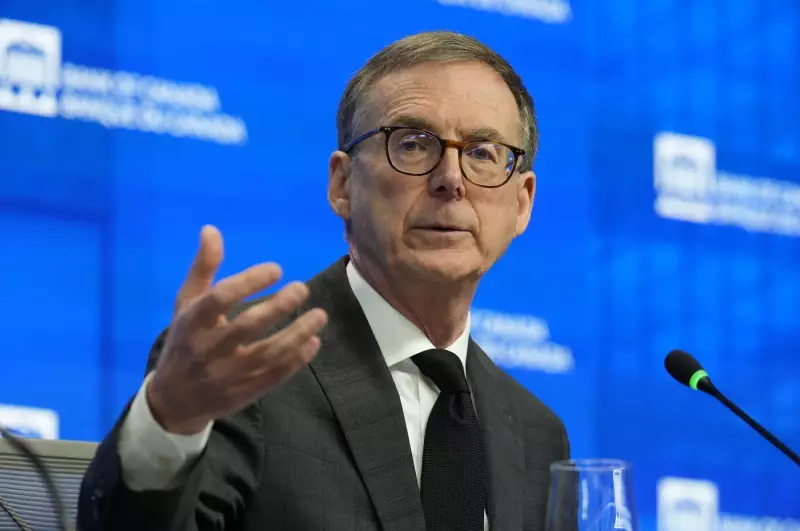
Bank of Canada Governor Warns of Economic Risks from U.S. Federal Reserve Independence Erosion
Bank of Canada Governor Tiff Macklem has issued a stark warning that any loss of independence by the United States Federal Reserve would have particularly severe repercussions for Canada. Speaking at a news conference in Ottawa on Wednesday, January 28, 2026, Macklem emphasized the critical importance of the Fed's autonomous decision-making for global financial stability, with Canada being uniquely vulnerable due to its deep economic integration with its southern neighbor.
Deep Economic Ties Amplify Canadian Vulnerability
Governor Macklem highlighted that Canada's economy is intricately linked with the United States through trade, investment, and financial markets. Any political interference or diminished independence at the U.S. Federal Reserve could lead to volatile interest rate decisions, inflationary pressures, or erratic monetary policy shifts. These changes would rapidly transmit across the border, disrupting Canadian financial conditions, affecting the value of the Canadian dollar, and complicating the Bank of Canada's own monetary policy objectives.
The Bank of Canada must often align its policy trajectory with that of the Fed to maintain economic stability, Macklem noted. A Fed that is subject to political pressures might make decisions based on short-term political goals rather than long-term economic fundamentals, forcing Canada into a difficult position of either following suit or diverging at a potential cost.

Historical Context and Future Concerns
The independence of central banks like the Federal Reserve has long been considered a cornerstone of modern economic policy, designed to insulate monetary decisions from electoral cycles and partisan interests. In recent years, however, there have been growing discussions and occasional pressures in the U.S. that could threaten this autonomy.
- Interest Rate Synchronization: Canada often mirrors U.S. interest rate adjustments to prevent disruptive capital flows and exchange rate swings.
- Trade Dependency: Over 75% of Canadian exports go to the U.S., making the health of the American economy directly consequential.
- Financial Market Integration: Canadian banks and investors are heavily exposed to U.S. financial markets, which are influenced by Fed policies.
Macklem's comments come amid a period of global economic uncertainty and serve as a preemptive caution to policymakers on both sides of the border. He stressed that maintaining the Fed's independence is not just an American concern but a critical issue for Canada's economic sovereignty and stability.
Broader Implications for Monetary Policy
The Bank of Canada governor elaborated that an independent Federal Reserve helps anchor inflation expectations and fosters confidence in financial markets worldwide. Should that independence be compromised, Canada could face:
- Increased borrowing costs for businesses and households.
- Greater difficulty in controlling domestic inflation.
- Potential need for more aggressive or unconventional policy measures to counteract spillover effects.
Macklem concluded by reaffirming the Bank of Canada's commitment to its own independence and evidence-based decision-making, while urging continued vigilance and international cooperation to uphold the principles of central bank autonomy globally.