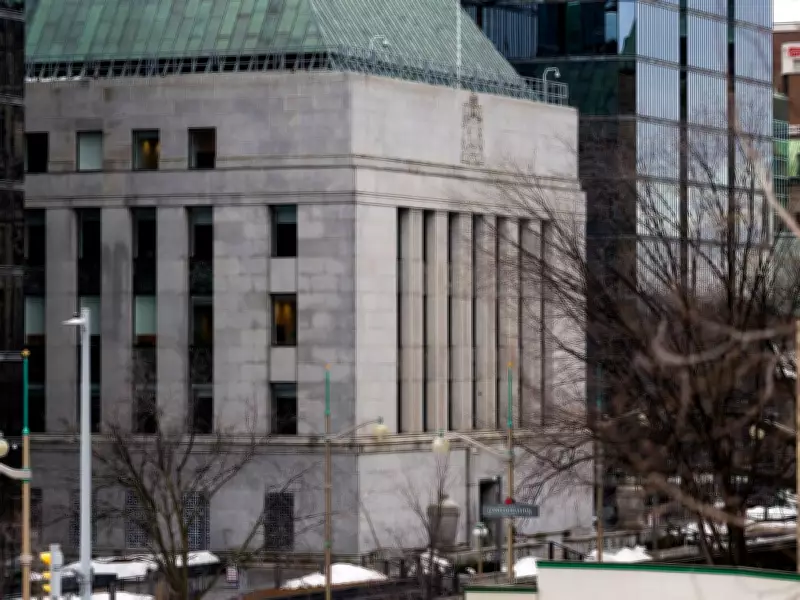
The Bank of Canada announced on Wednesday that it is holding its key interest rate at 2.25%, keeping the bank rate at 2.5% and the deposit rate at 2.20%. This decision comes amid ongoing global uncertainty driven by the evolving conflict in the Middle East and shifting U.S. trade policies.
Global Economic Context
The central bank's April outlook assumes that tariffs remain unchanged and that the global benchmark price of oil will decline to US$75 per barrel by mid-2027. The Iran war has led to sharply higher energy prices and transportation disruptions, which are diminishing growth prospects in oil-importing countries while boosting inflation worldwide.
In the United States, growth is expected to remain solid over the projection horizon, supported by AI-related investment and consumption. China's economy is being bolstered by robust exports, while the euro area faces headwinds from higher oil and natural gas prices that will weigh on economic activity.

Financial Conditions and Exchange Rates
Financial conditions have been volatile, reflecting daily developments in the Middle East and shifting market expectations for inflation and interest rates. Bond yields are modestly higher since January, while equity markets, which weakened sharply at the outset of the war, have recovered. Since the start of the conflict, the U.S. dollar has appreciated against most major currencies, but the Canada-U.S. exchange rate has remained relatively stable.
The global economy is expected to grow by about 3% in 2026, 2027, and 2028. However, projections for inflation over the next year have been revised upward due to the jump in energy prices.
Canadian Economic Outlook
The outlook for economic growth in Canada is little changed from the January Monetary Policy Report (MPR) projection. After a contraction in the fourth quarter of 2025, growth is forecast to have resumed in early 2026. Consumer and government spending are supporting economic activity, while tariffs and trade uncertainty are weighing on exports and business investment.
Housing activity declined in the fourth quarter and is being held back by slow population growth, economic uncertainty, and ongoing affordability issues. The labour market remains soft, with subdued employment growth over the past year and job losses in sectors targeted by U.S. tariffs. The unemployment rate continues to hover in the 6.5% to 7% range, reflecting both weak hiring and fewer job seekers.
GDP Growth Forecast
The Bank's April forecast projects GDP growth of 1.2% in 2026, rising to 1.6% in 2027 and 1.7% in 2028 as growth in exports and business investment resumes along a lower trajectory. With GDP growing slightly above potential, the current excess supply in the economy is gradually absorbed. While the war in Iran may alter its composition, overall GDP growth is little changed in the updated forecast. Since Canada is a large net exporter of oil, higher oil prices increase national income even as consumers are squeezed by higher gasoline prices.