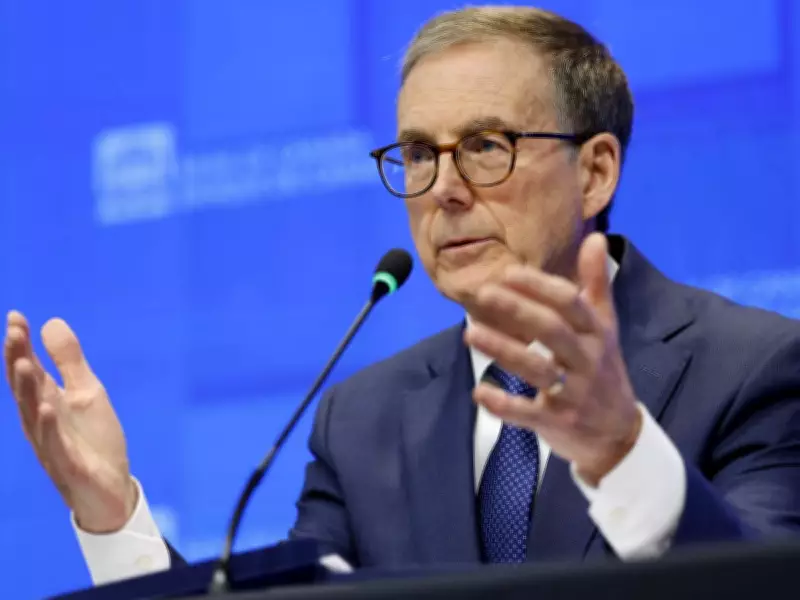
The Bank of Canada is considering whether to clarify its approach to supply shocks within its monetary policy framework, including the weight given to economic strength when addressing inflation. Governor Tiff Macklem emphasized that the bank's playbook must account for the economy's position relative to its potential.
Framework Review Underway
The central bank renews its framework every five years, with the 2026 review due by year-end. Policymakers argue that the next iteration must reflect a more volatile inflation environment shaped by rising global protectionism, geopolitical tensions, and the disruptive potential of artificial intelligence.
Macklem's Stance
“We are living in a world that is more prone to supply shocks, which are difficult for monetary policy,” Macklem told reporters in Washington last month. Such shocks create a dilemma because central banks cannot stabilize both inflation and growth simultaneously. He stressed that the bank must assess the output gap before deciding how to adjust interest rates when inflation is driven by supply constraints rather than demand.

“We want to be as clear as we can up front about what we think our reaction function would look like in different circumstances,” he said.
Credibility and Flexibility
The framework serves as a credibility mechanism, publicly committing the bank to its two per cent inflation target and outlining factors that guide rate decisions. While it already allows for flexibility, adding specific language on supply shocks would clarify why the bank might hold rates steady even if inflation temporarily rises.
“The value in making potential inaction more explicit in your framework is that it helps in your signalling to the market,” said Andrew Kelvin, head of Canadian and global rate strategy at TD Securities. Clearer communication could help reduce volatility in money markets, where interest rate expectations play a major role.
Deputy Governor's Insights
Deputy Governor Sharon Kozicki outlined the Bank of Canada’s thinking in a March speech, detailing how the bank might respond to different inflation and growth scenarios driven by supply shocks. In some cases, officials would “look through” small or short-lived increases in price pressures. However, if shocks generate large and persistent inflation, the bank would likely need to keep policy tight even if the economy is already weak.
This renewal is the first since the COVID-19 pandemic triggered severe supply-chain disruptions that pushed inflation to more than four times the bank’s target in 2022. Macklem has repeatedly emphasized that the economy was in excess demand when those shocks hit. “The consequences for inflation can come much faster and be much more rapid than if you’re starting at potential or in some excess supply,” he said in Washington.