

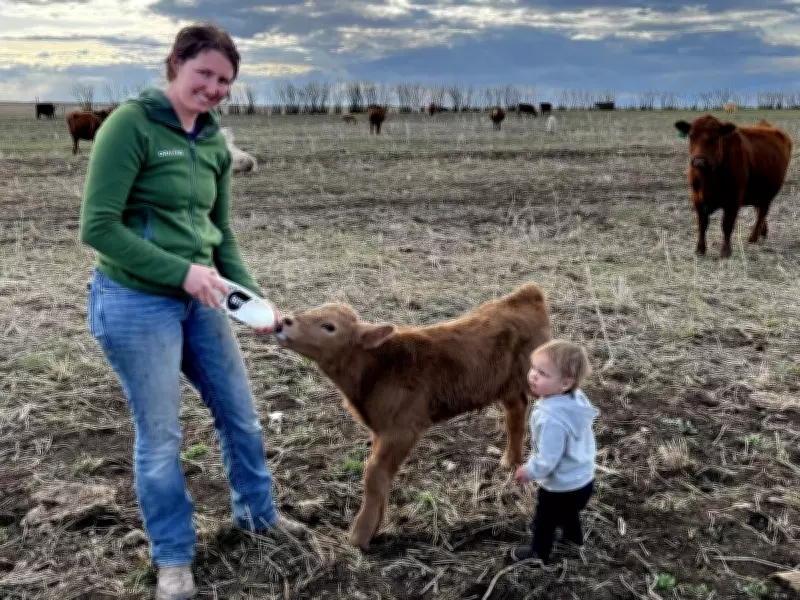
As International Women's Day approaches this Sunday, coinciding with the United Nations declaration of 2026 as the International Year of the Woman Farmer, the landscape of agriculture in Saskatchewan is witnessing a significant demographic shift. Women are increasingly taking on prominent roles in farming operations, moving beyond traditional support positions to become equal partners in agricultural businesses.
From Family Farm to Independent Agronomist
Kirsten Oram grew up as one of three sisters on her family's farm near Moosomin, Saskatchewan, where she developed an early and enduring passion for grain production and cattle raising. This childhood interest not only guided her through numerous seeding and harvest seasons but also led her to pursue a degree from the University of Saskatchewan. Today, Oram has established herself as an independent consulting agronomist while simultaneously managing a cattle farm with her husband Dane near Tugaske, approximately 150 kilometers northwest of Regina.
"I've kind of always been involved with agriculture," Oram reflects. "When you grow up on a farm like that, you're always involved."

A Collaborative Family Enterprise
The Orams have developed a flexible approach to managing both their farm and family responsibilities. Each morning, Kirsten and Dane determine who will care for their two-year-old daughter Lachlyn while the other tends to farm duties. This collaborative arrangement extends to all aspects of their operation, from animal care to business decisions.
"We do what fits for us," Oram explains. "It's a great lifestyle to get to be together and do something you love."
Statistical Evidence of Changing Trends
Recent census data confirms what Oram has observed in her own experience. According to 2021 statistics, women represented approximately 25 percent of farmers in Saskatchewan, marking a 6.5 percent increase from 2016 figures. While this remains below the national average of 30 percent, it represents the first significant increase in female farm operators in the province since 1991.
Oram attributes this upward trend to several factors:
- Women embracing roles as equal business partners rather than just "farm wives" or bookkeepers
- Diminishing stigma about daughters taking over family agricultural businesses
- Changing attitudes within the agricultural community over the past generation
Recognition and Challenges
The timing of this demographic shift aligns with increased global recognition of women's contributions to agriculture. Canada's Farm Show, scheduled for March 17-19 at REAL District in Regina, has adopted the UN's International Year of the Woman Farmer theme for its 2026 event. The show is part of a national tour sponsored by consulting firm Deloitte that specifically examines barriers women continue to face in the agricultural sector.
Despite progress, Oram acknowledges that gender-related challenges persist, including isolated instances of sexism and underrepresentation of women in leadership positions within agricultural organizations.
"I've always felt like I've had to work hard to prove myself," she notes, "but I think that's more of how I was raised, not because I am a woman."
A Growing Movement with Room for Improvement
While women remain a minority in Saskatchewan agriculture, their growing presence represents a meaningful shift in an industry historically dominated by men. Oram welcomes the opportunity that International Women's Day and the UN designation provide to highlight how women contribute to agrifood production worldwide.
The increasing visibility of women like Oram in Saskatchewan agriculture suggests that the sector is gradually evolving toward greater gender inclusivity, though significant work remains to achieve full equality in leadership and opportunity.






