

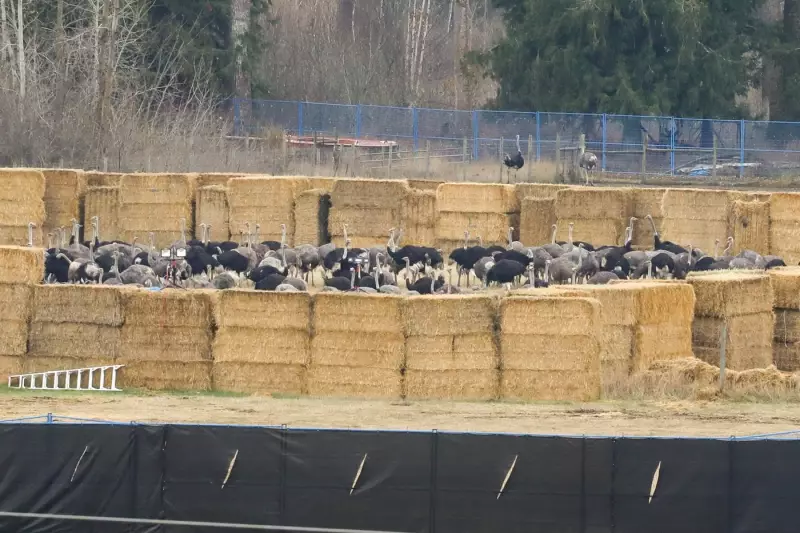
Legal Battle Ends as Ostrich Cull Proceeds in Edgewood
The Supreme Court of Canada has cleared the way for a controversial mass culling of ostriches at a British Columbia farm, ending a prolonged legal battle that captured national attention. On Thursday, November 6, 2025, the country's highest court declined to hear an appeal from Universal Ostrich Farms, allowing the cull of more than 300 birds to proceed immediately.
Gunshots echoed through the Edgewood area as the operation began, marking the grim conclusion to years of legal wrangling. The sounds signaled the start of a process that farm owners had fought desperately to prevent through multiple levels of judicial appeal.
Police Secure Perimeter Amid Emotional Scene
Royal Canadian Mounted Police established a secure perimeter around the property, limiting public access to the farm located in the rural community of Edgewood. Officers maintained a visible presence as workers began the difficult task of corralling the large flightless birds into specialized cull enclosures.

The court's decision represents the final legal option exhausted by the farm owners, who had argued against the cull order on multiple grounds. Their appeal to the Supreme Court represented their last chance to stop the mass euthanization of their ostrich flock.
Long-Running Controversy Reaches Conclusion
Universal Ostrich Farms has been at the center of the animal management controversy for several years, with regulatory authorities insisting the cull was necessary due to concerns about animal welfare and biosecurity issues. The farm had maintained that alternative solutions existed that would spare the birds' lives.
Local residents reported mixed reactions to the unfolding events. Some expressed relief that the long-running dispute had reached resolution, while others voiced distress about the fate of the animals. The farm's remote location in the Kootenay region did little to shield the community from the emotional impact of the court's decision.
The cull operation is expected to continue through the weekend as workers methodically process the large flock. Authorities have not specified the exact methods being used but confirmed that all procedures follow established animal welfare guidelines for such operations.
This case has highlighted the complex intersection of animal rights, agricultural regulations, and judicial oversight in Canadian farming operations. The Supreme Court's refusal to hear the appeal sets a significant precedent for similar cases involving livestock management disputes across the country.






