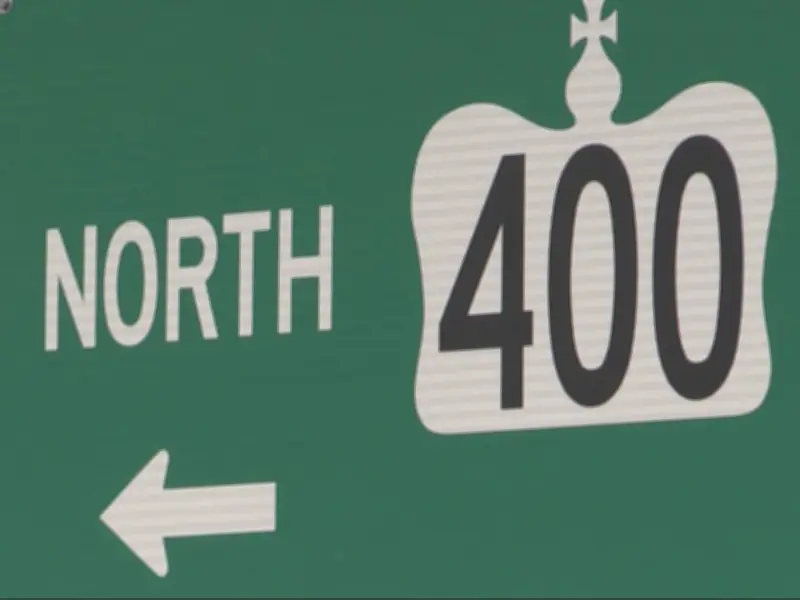
Ontario is raising the speed limit on Highway 400 from 100 km/h to 110 km/h, effective this summer, as part of a broader provincial initiative to increase speed limits on select highways. The change applies to a 60-kilometer stretch of Highway 400 between Highway 89 and Highway 12.
Details of the Speed Limit Increase
The Ontario government announced the speed limit increase on June 24, 2026, as part of a pilot program that began in 2019. The program has already raised speed limits on several other highways, including Highway 401, Highway 402, and Highway 417. According to the Ministry of Transportation, the decision is based on data showing that raising speed limits on these highways has not led to an increase in collisions.
“We have seen that raising speed limits on our highways can be done safely,” said a ministry spokesperson. “Our data shows no significant increase in collisions on sections where limits were raised to 110 km/h.”

Impact on Drivers and Safety
The speed limit increase is expected to reduce travel times for drivers using Highway 400, a major route connecting Toronto to cottage country and Northern Ontario. However, some safety advocates have expressed concerns about higher speeds leading to more severe crashes. The Ontario Provincial Police have stated they will continue to enforce speed limits and remind drivers to adjust their speed according to road conditions.
“Speed limits are set for ideal conditions,” said OPP Sergeant Kerry Schmidt. “Drivers must always consider weather, traffic, and road conditions when choosing a safe speed.”
Broader Context of Ontario's Highway Speed Policy
Ontario first raised speed limits to 110 km/h on six sections of highways in 2019, covering about 400 kilometers of road. Since then, the province has expanded the higher speed limit to additional stretches. The Ministry of Transportation monitors collision data and driver behavior on these sections to inform future decisions.
According to a 2024 report from the ministry, collision rates on 110 km/h sections were comparable to those on 100 km/h sections, with no statistically significant difference. The report also noted that average speeds increased by only 2-3 km/h on the higher-limit sections, suggesting that many drivers were already traveling at speeds close to 110 km/h.
Reactions from Stakeholders
The Ontario Trucking Association has expressed support for the speed limit increase, noting that it aligns with speed limits in other provinces. “Many of our highways in Western Canada have 110 km/h limits, and this change brings Ontario in line with those standards,” said association president Stephen Laskowski.
Conversely, the Canadian Automobile Association (CAA) has urged caution. “While we support evidence-based decisions, we want to ensure that enforcement and driver education keep pace with any speed limit changes,” said CAA spokesperson Kristine D’Arbelles.
Future Plans
The Ontario government has indicated it will continue to evaluate additional highways for potential speed limit increases. The Ministry of Transportation is also studying the feasibility of raising limits on Highway 400 further north and on other major routes like Highway 11 and Highway 17.
“We are committed to making Ontario’s highways safer and more efficient,” said the minister of transportation. “This change is part of a larger strategy to modernize our transportation network.”