

Iran Conflict Escalates Diesel and Fertilizer Costs for Ontario Farmers
The ongoing war in Iran is creating significant financial strain for farmers across eastern Ontario, with sharp increases in diesel and fertilizer prices threatening to disrupt the upcoming planting season. Agricultural producers are grappling with operational budget overruns as global market instability drives up essential input costs.
Immediate Impact on Farming Operations
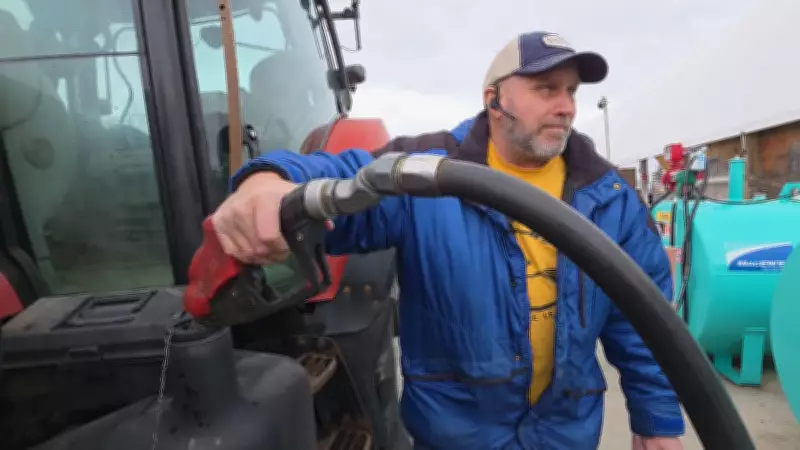
Mel Foster, owner of the Foster Family Farm located in eastern Ontario, recently demonstrated the practical consequences of these price hikes while filling his tractor on April 1, 2026. "We're seeing diesel costs that are completely unsustainable for our scale of operation," Foster explained. "When you combine that with fertilizer prices that have nearly doubled in some cases, it creates a perfect storm that could force difficult decisions about what crops we can afford to plant this spring."
The timing of these price increases is particularly problematic as farmers prepare for the critical spring planting window. Many agricultural operations rely heavily on diesel-powered equipment for tilling, planting, and transportation, while fertilizer represents one of the largest annual expenses for crop production.

Global Market Disruptions
The conflict in Iran has disrupted key shipping routes and production facilities that supply global agricultural markets. Iran represents a significant producer of both petroleum products and fertilizer components, and the military hostilities have created supply chain bottlenecks that are reverberating through international markets.
Eastern Ontario farmers are experiencing the direct consequences of these global disruptions, with local suppliers passing along increased costs that reflect both scarcity premiums and transportation challenges. The region's agricultural economy, which contributes substantially to Ontario's food production capacity, now faces uncertainty about production levels and profitability for the coming growing season.
Broader Economic Implications
Beyond individual farm operations, the price increases threaten to affect food prices throughout the supply chain. "When farmers face these kinds of input cost spikes, it inevitably translates to higher prices for consumers down the line," noted an agricultural economist familiar with the situation. "We're looking at potential impacts on everything from grain prices to livestock feed costs, which could have cascading effects throughout the food system."
The situation has prompted discussions among farming organizations about potential mitigation strategies, including adjusted planting schedules, alternative crop selections, and advocacy for government support programs. However, with the conflict showing no immediate signs of resolution, many producers are preparing for continued volatility in essential agricultural inputs.
As eastern Ontario farmers navigate these challenging economic conditions, the broader agricultural community is monitoring global developments closely, recognizing that regional food security and economic stability are increasingly interconnected with international geopolitical events.






