

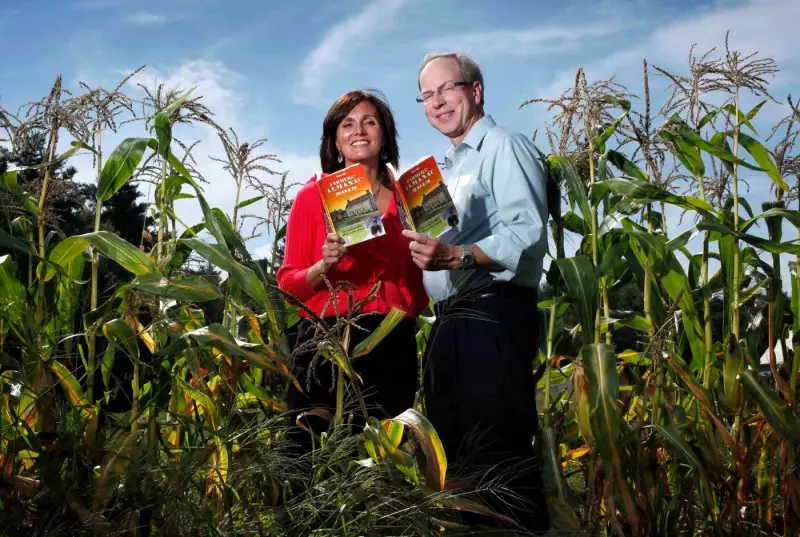
The Farmers' Almanac, a beloved American institution that has guided generations with its weather predictions and folk wisdom, has announced it will cease publication after an impressive 208-year run. The decision comes as the publication faces insurmountable financial challenges in the modern digital era.
End of an Era for Cultural Icon
Founded in 1818, the Farmers' Almanac has been a staple in households across North America, providing long-range weather forecasts, gardening advice, astronomical data, and homespun wisdom. The announcement marks the end of one of the longest-running publications in North American history.
The publication made the difficult decision public on November 7, 2025, with representatives citing ongoing financial pressures that made continuing operations impossible. Despite its loyal readership and cultural significance, the almanac struggled to compete in an increasingly digital media landscape.

Legacy of Weather Prediction and Folklore
Throughout its history, the Farmers' Almanac became famous for its distinctive approach to weather forecasting, using a secret formula that incorporated solar science, meteorology, and climatology. The publication claimed an accuracy rate of 80% for its predictions, though this was sometimes debated by mainstream meteorologists.
Beyond weather, the almanac served as a repository of practical knowledge, featuring planting charts, recipes, astronomical tables, and advice on everything from animal husbandry to household management. Its blend of scientific information and traditional wisdom made it uniquely valuable to rural and urban readers alike.
Financial Pressures Prove Insurmountable
The challenges facing print publications have been well-documented in recent decades, and the Farmers' Almanac was not immune to these trends. Despite maintaining a dedicated following, the publication struggled with:
- Declining advertising revenue
- Competition from digital weather services
- Rising production and distribution costs
- Changing reading habits among younger generations
Editor Sondra Duncan and publisher Peter Geiger, who have been the public faces of the publication in recent years, expressed profound sadness at the decision but acknowledged that financial realities left them no alternative.
The final edition of the Farmers' Almanac will serve as a tribute to its 208-year legacy, featuring highlights from throughout its history and reflections on its cultural impact. While the publication may be ending, its influence on American culture and its role in preserving traditional knowledge will continue to be felt for generations to come.






