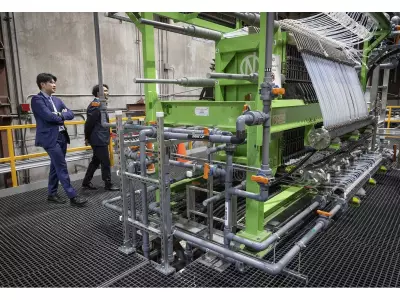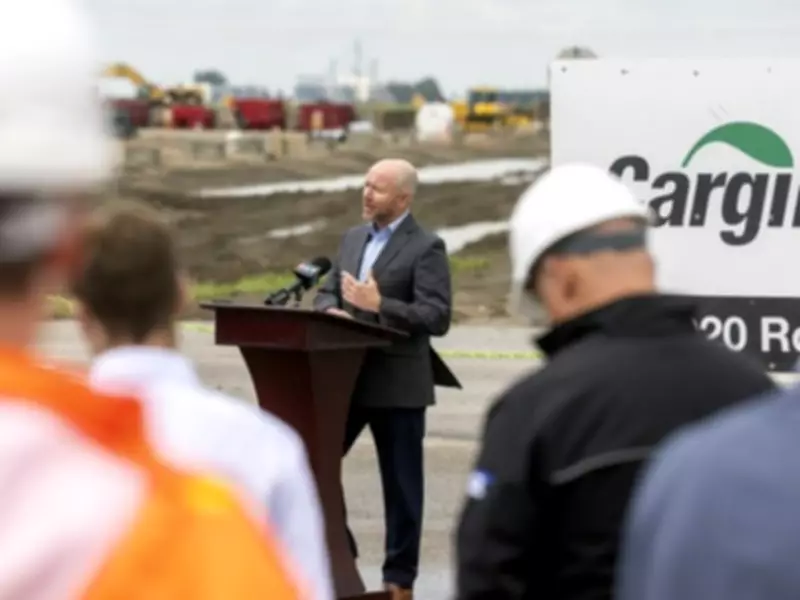
Cargill Limited has officially commenced operations at its new $350-million canola processing facility located on the outskirts of Regina, the company announced this week. The plant, situated west of the city at the Global Transportation Hub, is currently ramping up production and is projected to achieve an annual processing capacity of one million metric tonnes of canola seed. This output will be transformed into canola oil and meal, providing local farmers with a crucial new outlet for their crops following a year marked by significant market turbulence and tariffs.
Strategic Location and Infrastructure Advantages
Jeff Vassart, president of Cargill Canada, emphasized the strategic positioning of the facility during an interview with the Regina Leader-Post. "It's right in the heart of a really strong canola growing region," Vassart stated. He highlighted the excellent infrastructure that supports the plant's operations, including inbound truck routes for seed delivery and outbound rail connections to distribute products to various customers across the globe.
Timeline and Development Challenges
The project, first announced in April 2021, faced several delays that extended its completion timeline. Initial construction began in 2022 with hopes of opening by 2024, but various setbacks pushed the target to late 2025 before finally settling on spring 2026. Despite these challenges, the facility is now fully operational and expected to reach full capacity within the coming weeks, according to company officials.

Enhancing Global Competitiveness
In a news release, Vassart explained the broader implications of the new plant. "This facility strengthens our ability to connect Canadian farmers to growing global demand for food and renewable fuels," he said. "By expanding processing capacity in Saskatchewan, we're creating more opportunities for farmers while helping ensure Canada remains competitive in rapidly evolving global markets."
Navigating International Trade Dynamics
The facility's completion coincides with the recent reopening of the Canadian canola market to China, which has historically been one of its largest buyers alongside the United States. However, the path to this point was fraught with obstacles. In March 2025, China imposed a 100 percent tariff on canola oil and meal imports, followed by a 75.8 percent tariff on canola seed in August 2025. These measures effectively halted trade between Canada and China until a landmark agreement in January significantly reduced or eliminated these tariffs.
Market Context and Industry Developments
Amid last year's market uncertainties, plans for two other proposed canola processing plants in Regina were put on hold. Federated Co-operatives Limited paused its joint venture with AGT Foods for a renewable diesel complex and canola crush plant. Additionally, Regina-based Viterra's planned canola processing facility was revealed to be "in limbo" and "unlikely to go ahead" after the company's acquisition by U.S.-based Bunge Limited.
Future Prospects and Demand Drivers
Despite the shifting commodity market and inflationary pressures affecting large capital projects, Vassart remains optimistic about the demand outlook. He notes that canola oil continues to see strong demand as a food product, while rapid growth opportunities are emerging from its use as feedstock for producing low-carbon fuels. This dual demand stream positions the new facility to capitalize on both traditional and innovative market segments, reinforcing Cargill's commitment to sustainable agricultural practices and economic resilience in the region.