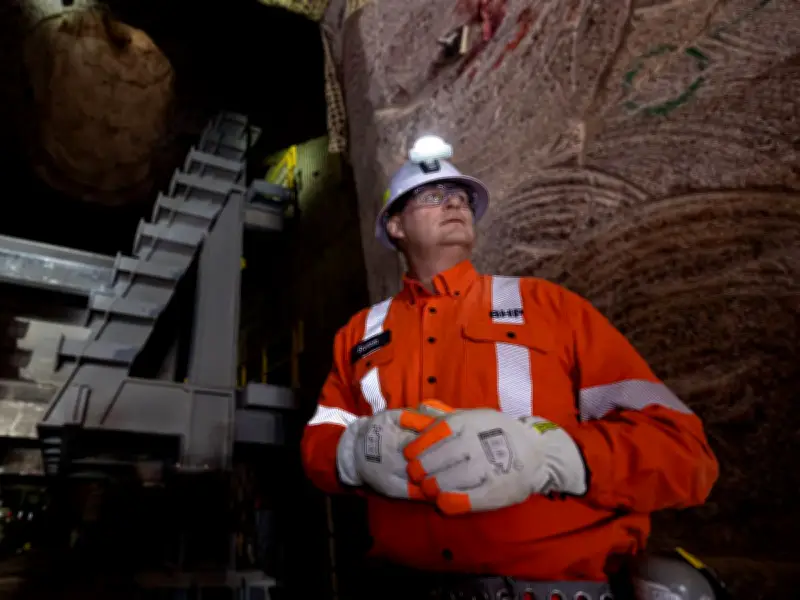
BHP's Jansen Potash Mine Costs Balloon by US$2 Billion
BHP Canada Inc. has announced that the cost to expand its massive potash mine near Jansen, Saskatchewan has spiked by an additional 40 percent. The company now estimates the capital budget for stage two of the Jansen project will reach US$6.9 billion, up from the previous estimate of US$4.9 billion. This increase is attributed to costly delays and rising material prices.
Write-Down and Revised Schedule
BHP has written down the project by US$2.3 billion. The company stated that a two-year extension of the construction schedule allowed it to review cost and schedule estimates and implement a response plan to address the added pressures. The Australian mining giant's Canadian subsidiary now faces a total bill of US$15.3 billion for the first stage of the potash mine, which is set to become the world's largest.
Production and Market Impact
BHP says the Jansen mine could potentially produce 10 percent of the world's annual total of the potassium-rich mineral fertilizer. The first stage remains on track to open in mid-2027, with a ramp-up to 4.14 million tonnes of potash per year. Stage two, now targeted for production in 2031, will more than double the facility's output to 8.5 million tonnes annually.

Cost and Competitive Advantage
The new budget for stage two includes contingencies and capital for a shipping terminal south of Richmond, British Columbia, and a third-party rail line. BHP expects production costs to range between US$114 and US$130 per tonne of potash, well below the benchmark price of US$330 per tonne at the Port of Vancouver, providing a healthy margin. The company believes this cost advantage will make Jansen the lowest unit cost Canadian potash mine.
Long-Term Returns
Brandon Craig, BHP's president and CEO-elect of its Americas projects, emphasized the long-term value of the project. The combined Jansen Stage 1 and 2 will be a low-cost, long-life asset with an almost 60-year mine life, expected to generate benefits for shareholders for decades. As of May 2026, construction on stage two is 16 percent complete.