NASA's $100 Billion Artemis II Mission: Why Return to the Moon Now?
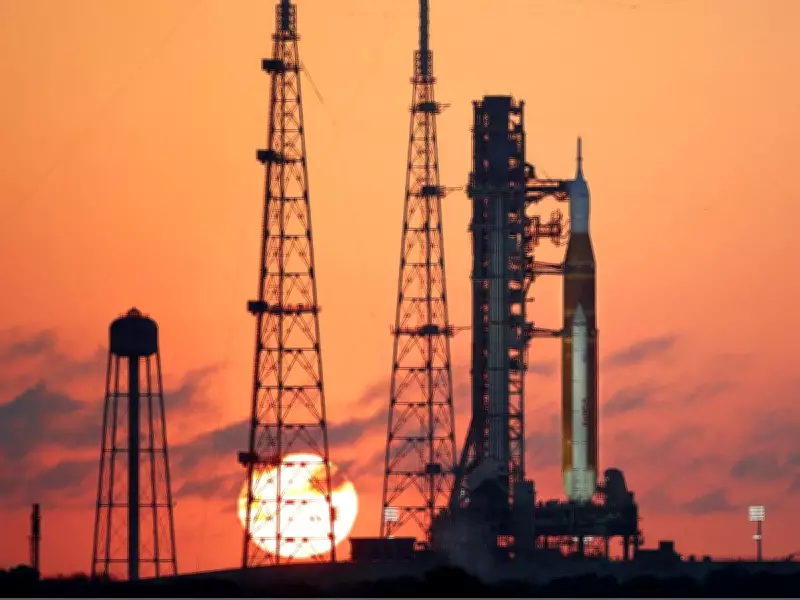
The United States space agency NASA is preparing to launch its ambitious Artemis II mission, with a staggering budget approaching $100 billion. This program represents America's first crewed lunar mission since the Apollo era, aiming to send four astronauts on a journey around the moon as early as April 1st. The mission serves as a critical precursor to planned lunar landings later this decade, marking a significant shift in human space exploration priorities.
The Historical Context and Modern Motivations
When NASA achieved the historic Apollo 11 moon landing in 1969, the motivation was clear and singular: to defeat the Soviet Union in the space race and establish American technological supremacy during the Cold War. Today, the Artemis program's objectives are more multifaceted and complex, with justifications varying depending on who provides the explanation.
Several key drivers are propelling this monumental investment in lunar return:

- Scientific advancement through extensive lunar research and resource exploration
- Geopolitical competition with China's rapidly expanding space program
- Sustainable infrastructure development for long-term space exploration
- Technological demonstration of NASA's capabilities beyond low-Earth orbit
- Preparation for eventual Mars missions by testing deep-space living conditions
The Institutional Imperative for Human Spaceflight
According to space policy expert Casey Dreier of the Planetary Society, human spaceflight remains at the very core of NASA's institutional identity, tracing directly back to the Apollo program's legacy. The agency has historically maintained flagship human spaceflight initiatives that drive American space exploration forward, from the Space Shuttle program to the International Space Station.
"Human spaceflight is at the core of the institution of NASA going back to Apollo, and the self-identity of a large swath of the agency," Dreier emphasized. "Now that, in a sense, NASA has done low-Earth orbit and done the reusable Shuttle, it's now the moon."
From Political Decisions to Practical Realities
The current momentum behind Artemis stems from a 2017 executive order signed by President Donald Trump, which officially redirected NASA's focus toward lunar return. This political directive combined with existing hardware development and sustained funding to create the program's current trajectory. Unlike Mars missions, which remain technologically challenging, the moon represents an achievable destination with current capabilities.
Former NASA deputy administrator Lori Garver noted, "We went to the moon and we have wanted to go back ever since. And the combination of hardware and technology have allowed us to finally be in a position where that's in sight."
Building Toward Mars Through Lunar Experience
While the moon serves as the immediate destination, Mars remains NASA's ultimate long-term objective. The Artemis program will provide crucial learning opportunities for off-world living, with missions focused on gathering scientific data about lunar resources and environmental conditions. NASA recently unveiled designs for a permanent lunar base that will allow astronauts to live, work, and conduct experiments in deep-space conditions.
This lunar outpost will essentially serve as a testing ground for technologies and living arrangements necessary for eventual Mars missions, creating a stepping stone approach to deeper solar system exploration. The International Space Station's planned retirement this decade further emphasizes the need for new destinations that push human presence beyond low-Earth orbit.
The $100 billion Artemis investment thus represents not merely a repeat of past achievements, but a strategic foundation for humanity's next giant leap into the solar system, balancing immediate scientific returns with long-term exploration goals in an increasingly competitive global space arena.