Canadian Astronaut Jeremy Hansen Set to Make History with Artemis 2 Moon Mission
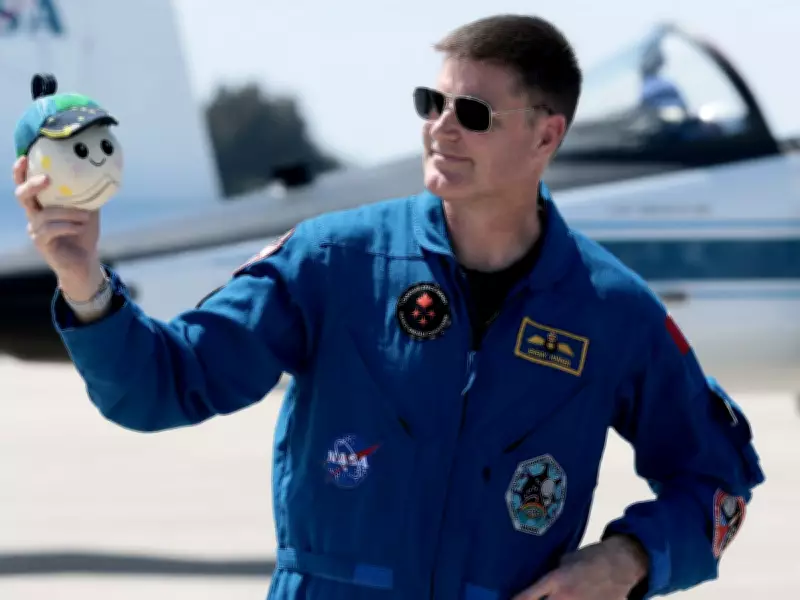
On Wednesday evening, if all proceeds according to plan, Canadian astronaut Jeremy Hansen will participate in humanity's first journey to the moon in over half a century as part of NASA's Artemis 2 mission. The last crewed lunar orbit occurred more than 53 years ago, in December 1972, making this a monumental event in space exploration history.
The Long Hiatus: Why Haven't We Returned to the Moon?
Since the final Apollo mission, human spaceflight has been confined to low-Earth orbit, primarily to the International Space Station, which orbits just a few hundred kilometers above our planet. In stark contrast, the moon is approximately a thousand times farther away, presenting significant logistical and financial hurdles.
The immense distance is a primary factor, compounded by the staggering costs associated with lunar missions. During the mid-1960s, at the height of the Apollo program, NASA's budget exceeded four percent of total U.S. federal spending. However, funding has dramatically declined since then, never surpassing one percent after 1993 and currently hovering around a third of one percent.

Additionally, the original Apollo missions were driven by the intense space race against the Soviet Union, famously initiated by President John F. Kennedy's 1962 "We Choose to go to the Moon" speech. Once the United States achieved the first moon landing, the geopolitical urgency diminished, leading to the cancellation of planned missions Apollo 18 through 20 due to escalating costs and the Vietnam War.
Failed Attempts and Shifting Priorities
Several U.S. presidents have advocated for a return to the moon, but sustained funding and political will have consistently fallen short. In 1989, President George Bush proposed a lunar return on the 20th anniversary of the Apollo 11 landing, but his successor, Bill Clinton, redirected focus toward the International Space Station in collaboration with Russia.
President George W. Bush revived lunar ambitions in 2004, targeting a landing by 2020, only for President Barack Obama to cancel the essential Constellation program. During his first term, President Donald Trump initially prioritized space militarization and Mars exploration, later shifting to support a moon return. In his second term, Trump mandated NASA to establish a permanent moon base by 2030, despite personnel reductions and limited budget increases, relying partly on private-sector partners like SpaceX and Blue Origin.
The Financial and Technical Challenges
Exact figures for the Apollo program are elusive, but estimates place its total cost between $20 billion and $30 billion at the time, equivalent to $200 billion to $300 billion when adjusted for inflation. The Artemis program has accrued substantial expenses as well, with a four-year-old estimate suggesting a $93 billion price tag. In 2021, NASA projected the cost per Artemis launch at approximately $4.1 billion.
The dangers of lunar missions are profound, with distance being a critical factor. In low-Earth orbit, emergencies can be addressed quickly, as demonstrated in February when astronaut Michael Fincke became the first medical evacuee from the International Space Station. A journey to the moon, however, entails far greater risks due to the extended travel time and isolation from immediate Earth-based support.
A New Era of Lunar Exploration
Jeremy Hansen's involvement in Artemis 2 not only marks a significant milestone for Canada but also heralds a renewed global commitment to lunar exploration. As the first non-American to participate in such a mission, Hansen symbolizes the collaborative spirit of modern space endeavors. Despite the historical challenges of cost, distance, and shifting political priorities, the upcoming launch represents a pivotal step toward sustained human presence beyond Earth's immediate vicinity.