After a protracted and contentious confirmation process, billionaire entrepreneur and pilot Jared Isaacman has been officially confirmed as the new chief of the National Aeronautics and Space Administration (NASA). The announcement, made on December 17, 2025, concludes a months-long political tug-of-war that highlighted deep divisions over the future direction of America's space agency.
A Contentious Path to Confirmation
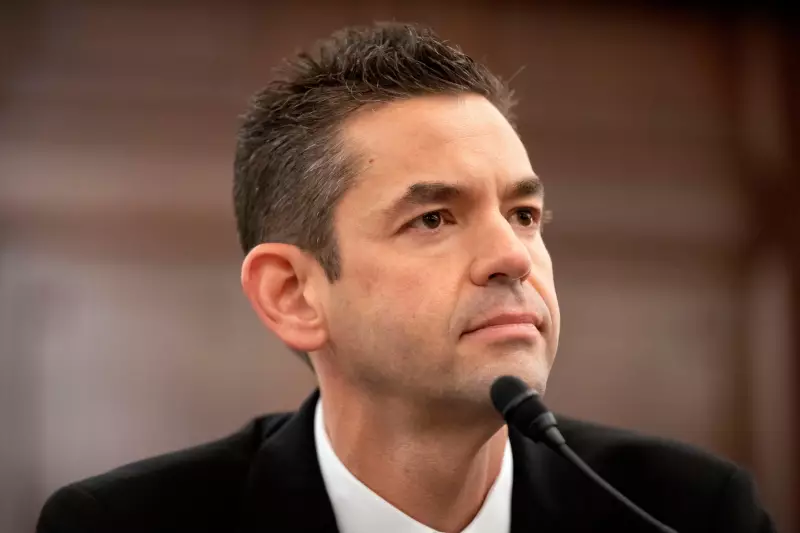
The road to Isaacman's confirmation was far from smooth. His nomination faced significant scrutiny during hearings before the Senate Commerce, Science, and Transportation Committee. A pivotal hearing took place on Wednesday, December 3, 2025, on Capitol Hill in Washington, where Isaacman fielded questions about his vision, commercial spaceflight experience, and the balance between public and private sector roles in space exploration.
Isaacman, known for funding and commanding the first all-civilian orbital spaceflight, Inspiration4, represents a shift towards leaders with substantial private sector space experience. His supporters argued that his hands-on background in commercial spaceflight is precisely what NASA needs to foster innovation and manage ambitious public-private partnerships. Critics, however, voiced concerns about potential conflicts of interest and the prioritization of commercial ventures over scientific and exploratory mandates.

What Isaacman's Leadership Signals for NASA
The confirmation of Jared Isaacman marks a definitive moment for NASA's trajectory. Analysts suggest his leadership will likely accelerate the agency's reliance on commercial partners for routine operations, such as cargo and crew transport to the International Space Station. This could free up agency resources to focus on more complex, deep-space missions, including the ongoing Artemis program aimed at returning humans to the Moon.
Furthermore, Isaacman's proven ability to rapidly develop and execute private missions may bring a new culture of speed and cost-consciousness to certain NASA projects. The key challenge will be navigating the delicate balance between these commercial efficiencies and the agency's foundational roles in fundamental science, aeronautics research, and maintaining U.S. leadership in space on a geopolitical stage.
Implications for the Future of Space Exploration
With the political battle now over, the space community is watching closely to see how Isaacman transitions from a private citizen astronaut to the head of a sprawling federal agency with a budget of tens of billions of dollars. His confirmation underscores the evolving nature of space exploration, where the lines between government agency and private company are increasingly blurred.
The months-long debate over his appointment reflects broader questions about the governance of space activities in the 21st century. As NASA stands at the crossroads of lunar ambitions, Mars planning, and Earth science, Isaacman's tenure will be a real-world test of whether a leader forged in the private space sector can successfully steer the world's most iconic space agency into its next chapter.