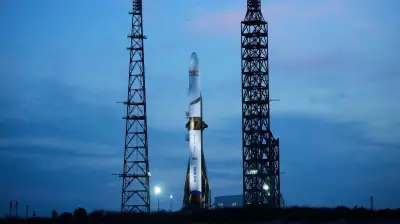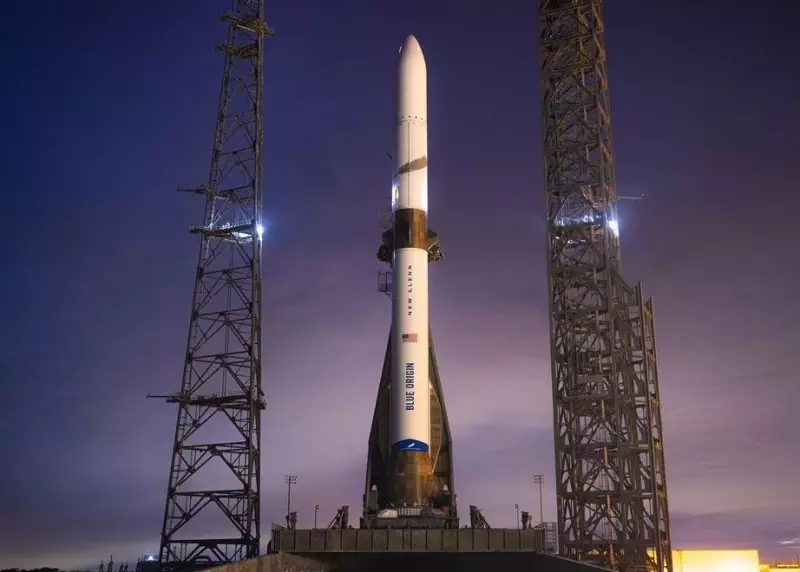
Jeff Bezos' space company, Blue Origin, was forced to scrub the highly anticipated second launch of its powerful New Glenn rocket on Sunday. This mission, the vehicle's first for NASA, was postponed due to a combination of unfavourable weather and problems with unspecified ground equipment at the Cape Canaveral launch site in Florida.
Launch Attempt Thwarted by Multiple Delays
The launch team pushed back the scheduled liftoff time several times throughout the day, holding out hope for a break in the conditions. Ultimately, the decision was made to stand down. The mission aims to send two spacecraft, manufactured by Rocket Lab Corp., on a trajectory toward the Red Planet. This flight represents a critical test for Blue Origin as it seeks to establish itself as a major player and challenge the dominance of Elon Musk's SpaceX.
It remains unclear when the company will attempt the launch again. This second flight has been long-awaited, following the rocket's initial debut flight back in January 2025. Complicating the schedule is a recent U.S. government shutdown, which prompted the Federal Aviation Administration (FAA) to issue an emergency order restricting commercial space launches during the very window originally planned for New Glenn's backup attempt.

Navigating Regulatory and Technical Hurdles
Laura Maginnis, New Glenn’s vice president of mission management, addressed the potential conflict at a press briefing the day before the scrub. She stated that Blue Origin is "working closely with the FAA and NASA on opportunities for exceptions to the policy based on how our mission goes." This highlights the complex regulatory environment in which private space companies operate.
The New Glenn rocket is years behind its original development schedule. In January, Blue Origin's CEO, Dave Limp, had outlined an ambitious plan for the year, targeting a second launch by late spring and a total of six to eight flights in 2025. A successful launch is paramount for Blue Origin to clear its $10 billion backlog of customer contracts and to get back on track to compete with SpaceX's workhorse Falcon 9, the world's most prolific launch vehicle.
High Stakes for Blue Origin's Future
Beyond this immediate mission, the success of New Glenn is integral to Blue Origin's most ambitious projects. The company has a contract with NASA to launch astronauts to the moon as part of the agency's Artemis V mission. While Blue Origin already sends tourists to the edge of space on its smaller rockets, New Glenn provides the heavy-lift capability necessary to deliver significant payloads like satellites and spacecraft into orbit and on interplanetary journeys.
Like SpaceX's Falcon rockets, New Glenn is designed to be partially reusable. After launch, the company planned to land the rocket’s massive booster on a barge in the Atlantic Ocean for refurbishment and future flights. During its debut flight in January, the rocket successfully reached orbit, but the booster missed its intended landing.
New Glenn is part of a new class of next-generation rockets, including United Launch Alliance's Vulcan and the European Space Agency's Ariane 6, which are seen as potential competitors in the launch industry. However, all have faced significant challenges in achieving a high flight frequency to orbital space.