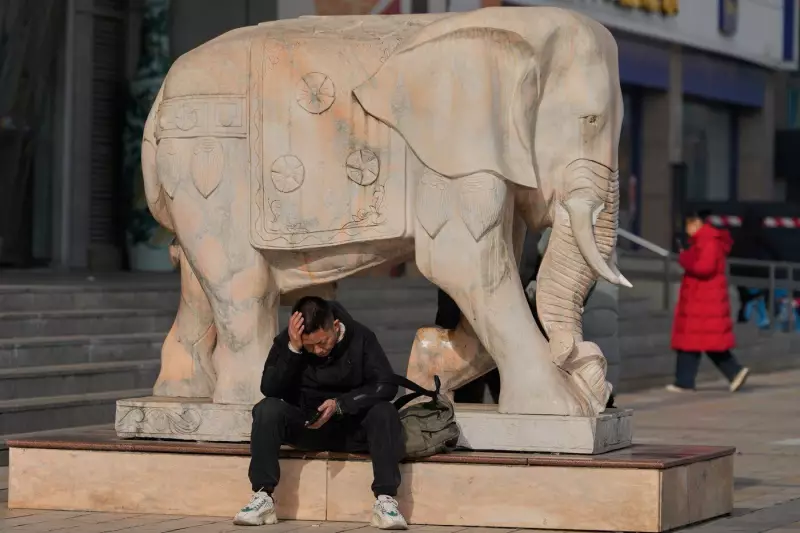
In a stark reflection of modern urban isolation, a new mobile application has emerged in China specifically designed for the country's rapidly growing population of young people who live alone. The app's central, unsettling question: 'Are you dead?'
A Digital Check-In for the Solitary Generation
The application, as reported by The Associated Press on January 15, 2026, functions as a daily safety check. It targets millions of young Chinese adults who have moved to major cities for work, often living in single-person households far from family. The core mechanic requires users to regularly confirm they are safe and well. If a user fails to respond to the app's prompts over a set period, the software can be programmed to alert designated emergency contacts.
This development underscores a significant demographic shift. Driven by later marriage ages, demanding careers, and high urban housing costs, solo living has become a defining feature of life for many Chinese millennials and Gen Z. The phenomenon, while offering independence, also carries risks associated with social isolation and having no immediate person to notice if something goes wrong.

Addressing the Risks of Urban Isolation
The concept behind the 'Are you dead?' app is not entirely novel, with similar check-in services existing in other forms for elderly populations. However, its targeted marketing toward young, able-bodied adults marks a new frontier. It points to a growing recognition of the vulnerabilities that can accompany single-person households, regardless of age.
Social commentators note that while the app provides a practical, tech-driven solution to a real safety concern, its very existence is a poignant commentary on contemporary life. It highlights how digital tools are increasingly mediating—and attempting to safeguard—fundamental human connections and well-being in densely populated yet personally isolating urban environments.
A Symptom of a Broader Social Trend
The launch of this application is more than a quirky tech story; it is a lens into the social fabric of modern China. Analysts link the trend of solo living to broader economic and cultural changes, including intense workplace competition and evolving attitudes toward traditional family structures. The app represents a market-driven response to the anxieties, both personal and societal, that these changes produce.
While the effectiveness and privacy implications of such an app will be debated, its emergence is a definitive sign of the times. It encapsulates a global urban reality where digital innovation steps in to fill gaps created by evolving lifestyles, offering a binary solution—'alive' or 'dead'—to the complex, nuanced experience of living alone.