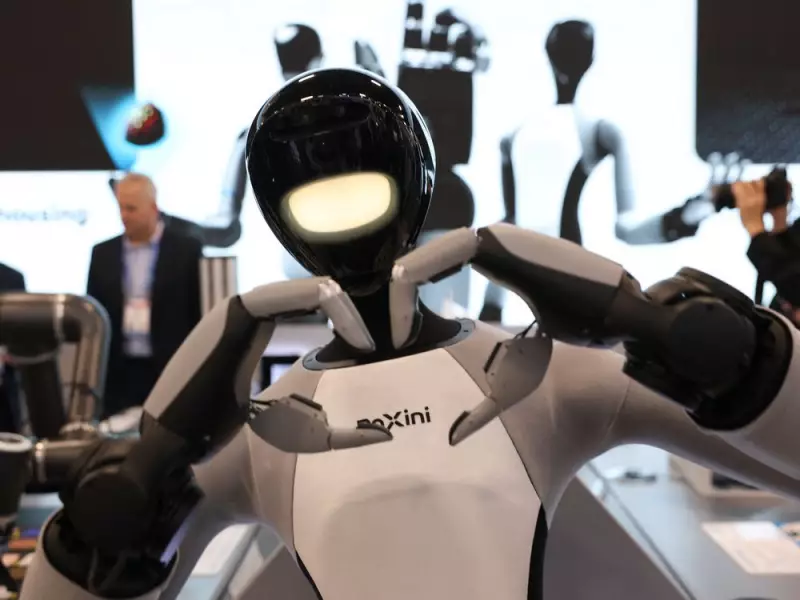
The future of domestic help rolled, waved, and folded onto the stage at the Consumer Electronics Show (CES) in Las Vegas this week, but it did so at a pace that tested the patience of onlookers. Humanoid robots, designed to mimic human form and function, were a central attraction, demonstrating tasks like pouring coffee, folding laundry, and dealing poker hands.
The Slow March of Domestic Automation
While billions of dollars flow into robotics development, the CES demonstrations underscored a significant gap between ambitious vision and practical reality. LG Electronics Inc. took a notable risk with a live demo of its concept robot, CLOiD. Standing just under five feet tall with a digital display for eyes, the wheeled humanoid trundled on stage, waved, and then proceeded to load a single item of clothing into a washing machine. Observers noted the action was executed almost painfully slowly, highlighting the immense technical hurdles that remain.
"LG’s AI home envisions a seamlessly connected flow between devices, spaces and human behaviour, ultimately achieving our goal of a zero-labour home," said LG executive Brandt Varner during a press event. The company's pitch is part of a broader push into "ambient care"—where machines assist with daily life quietly and efficiently. However, the demo made it clear that unleashing robots in the unpredictable environment of a family home is a far greater challenge than deploying them in controlled factory settings.

Beyond the Spectacle: The Reality of "Physical AI"
The Consumer Technology Association dedicated an entire exhibition hall to robotics this year, signaling that "physical AI" is the industry's next major frontier. Beyond humanoids, many robots were designed for business applications in manufacturing, logistics, and food service. Companies like Artly Coffee and VenHub Global showcased AI-powered robotic cafes and convenience stores.
For humanoids aimed at the home, such as SwitchBot’s Onero H1, the focus is on conquering mundane, repetitive chores. A key historical obstacle has been fine motor control, particularly the dexterity required for tasks involving thumbs. While recent advances in artificial intelligence and vision-based technology are making robots more nimble, allowing them to handle multiple tasks, the journey toward being both capable and cost-effective is long.
Investment Floods In, But Key Hurdles Remain
The tech industry is making a substantial bet on humanoid robots as the next evolution in automation. These machines are built to stand erect, navigate human spaces, and use our tools—with the ultimate goal of performing tasks more efficiently. Yet, the CES showcases revealed persistent challenges.
Many humanoids are still confined to warehouses, with companies offering limited proof of function outside tightly managed experiments. Public demonstrations are rare because the risk of failure is high. Before they can become common home helpers or companions, these robots must become significantly more reliable, more mobile, and much cheaper.
For now, the near future of robotics in daily life will likely be dominated by machines built for specific jobs, like mowing lawns or folding laundry—even if they do it at a snail's pace. The spectacle at CES 2024 was less about instant revolution and more about a slow, steady, and sometimes awkward march toward a more automated tomorrow.