In a high-stakes global race to harness one of the most transformative technologies of the 21st century, Canada finds itself at a pivotal juncture. The nation boasts the highest number of quantum computing companies per capita worldwide, a legacy of pioneering work that began over four decades ago. However, with tech giants like Google and Microsoft announcing staggering breakthroughs, the pressure is on for Canada to maintain its position as a quantum hotbed.
The Quantum Computing Revolution Explained
At its core, quantum computing represents a fundamental shift from classical computing. Traditional computers, from smartphones to supercomputers, process information using binary bits—tiny switches that are either a 0 or a 1. Quantum computers utilize quantum bits, or qubits, which are typically subatomic particles like electrons or photons.
Thanks to the quantum principle of superposition, a qubit can exist as a 0, a 1, or both states simultaneously. This property, along with another called entanglement, allows quantum machines to perform certain calculations at speeds exponentially faster than even the most powerful supercomputers today.

This immense power comes with immense challenge. Qubits are notoriously fragile and must be isolated in extremely cold, controlled environments to prevent interference or "noise" that causes errors. Building large-scale, reliable quantum computers is therefore one of modern technology's greatest engineering hurdles.
A Surge of Global Breakthroughs Intensifies the Race
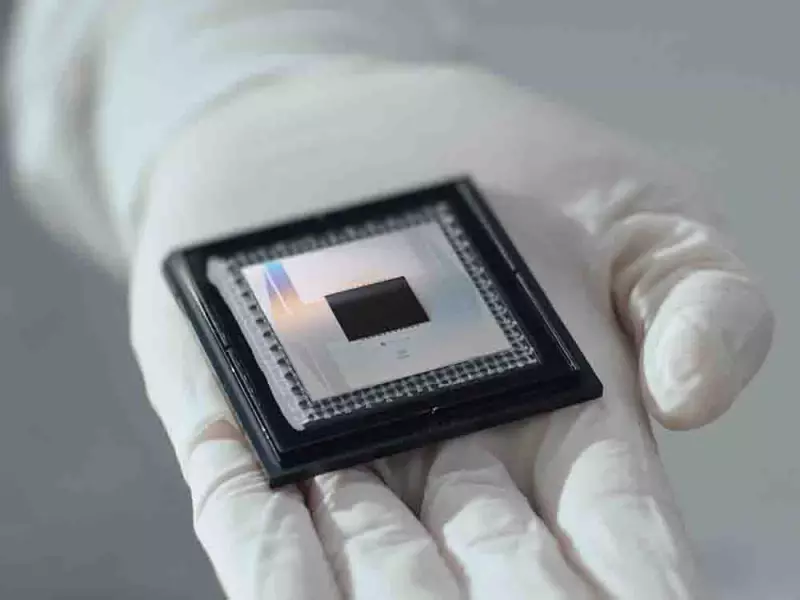
The competition reached a new fever pitch in late 2024 and early 2025. In December 2024, Google unveiled its Willow quantum chip, claiming it solved a specific problem in minutes that would take the world's best supercomputer 10 septillion years—a timeframe that dwarfs the age of the universe.
Not to be outdone, Microsoft revealed its first quantum chip, Majorana 1, in February. The company said it was powered by a newly created state of matter known as a topological superconductor. That same month, Amazon entered the fray with its Ocelot chip, asserting it could slash the cost of crucial quantum error correction by up to 90%.
In March, Canada's own Vancouver-founded D-Wave Quantum Systems Inc. claimed to have achieved "quantum supremacy"—the milestone where a quantum computer solves a problem practically impossible for a classical machine.
Canada's Quantum Bet: The Champions Program
Recognizing the strategic imperative, the Canadian government made a decisive move. On December 15, 2025, Artificial Intelligence Minister Evan Solomon launched the Canadian Quantum Champions Program. This federal initiative is designed to identify and fund leading "anchor" companies within the national quantum sector, aiming to solidify Canada's competitive edge.
The critical question now is whether this support, combined with the country's deep academic and startup ecosystem, will be enough. Quantum computing promises to revolutionize fields from drug discovery and material science to cryptography and complex logistics. Letting leadership in this futuristic technology slip away would represent a major missed economic and strategic opportunity.
The next few years will be a make-or-break period. As billions pour into research from corporate and state actors worldwide, Canada's early advantage in quantum computing faces its most serious test yet.