The Canadian government's proposed Safe Social Media Act, Bill C-34, tabled this week by the Carney government, aims to ban social media for children under 16. However, critics warn the bill grants sweeping new powers that could lead to mandatory age verification for all internet users and the creation of a censorship czar with authority over online content, including AI chatbots.
Age verification could become mandatory for all internet users
The immediate hitch with enforcing a social media ban on children is that it will require age verification for everyone else. Canada already imposes age controls on buying liquor, and the impact is predominantly felt by thousands of non-children forced to show identification to purchase beer or enter bars.
The most benign option is to follow Australia's model, leaving social media companies to install age verification programs using voice or facial recognition. However, an internal Australian report found most youth easily defeat such checks, sometimes by simple measures like putting ping pong balls in their cheeks during facial recognition. The tenets of Bill C-34 could just as easily enshrine a regime in which social media companies are forced to adopt harder measures, such as mandatory verification of government-issued ID.

An all-powerful social media czar with censorship powers
According to perennial tech policy critic Michael Geist, the single most impactful consequence of Bill C-34 is the one barely getting mentioned in press coverage: the appointment of an all-powerful social media czar with censorship powers. The czar would have authority to decide what AI chatbots are allowed to say and could compel platforms to remove content deemed harmful to children, potentially extending to political speech or satire.
Geist noted that similar laws in other countries have led to over-censorship, as platforms err on the side of caution to avoid penalties. The bill also includes provisions for fines up to 10% of global revenue for non-compliance, creating strong incentives for platforms to remove content aggressively.
Historical context: Unintended consequences of well-intentioned laws
Canada has a history of adopting nice-sounding policy that yields an avalanche of unintended consequences. Ottawa legalized assisted suicide in 2016 with the promise it would only apply to the terminally ill. Ten years later, MAID has killed tens of thousands more Canadians than its planners anticipated, with scores of examples in which patients were prescribed death in lieu of treatment.
In 2019, the B.C. Legislative Assembly unanimously passed DRIPA, enshrining the United Nations Declaration on the Rights of Indigenous People into law. Despite explicit assurances that the bill wouldn't override existing laws or impose an Indigenous veto on government action, that's exactly what started happening in late 2025.
Minister defends bill as necessary to protect children
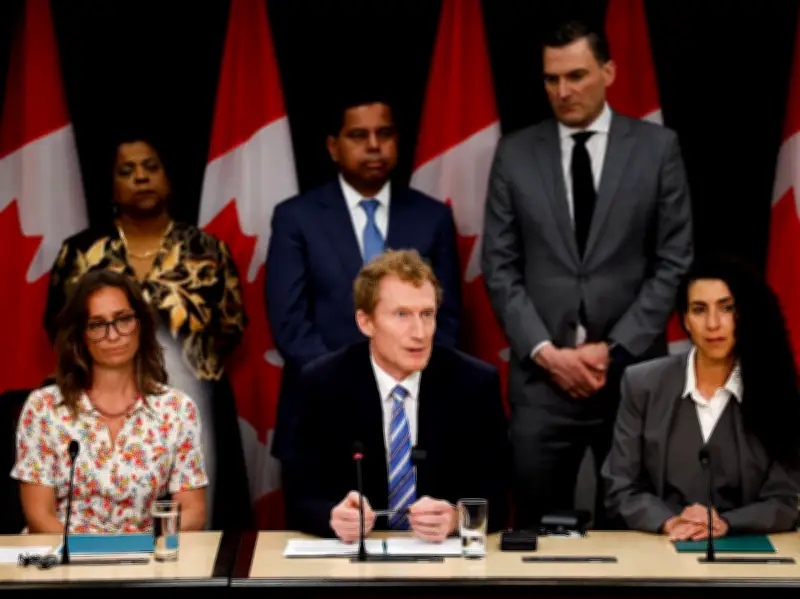
When the Carney government tabled the Safe Social Media Act, the pitch was that it was needed to protect children. The bill's singular goal was to ban social media for children under 16, which was necessary because 'kids are dying,' according to Minister of Canadian Identity and Culture Marc Miller. However, critics argue that like other well-intentioned laws, C-34 includes a surprisingly large toolbox of new government controls on the internet that could be abused.
The bill now moves to committee, where amendments could narrow its scope. But as written, it represents a significant expansion of government authority over online speech and identity verification.