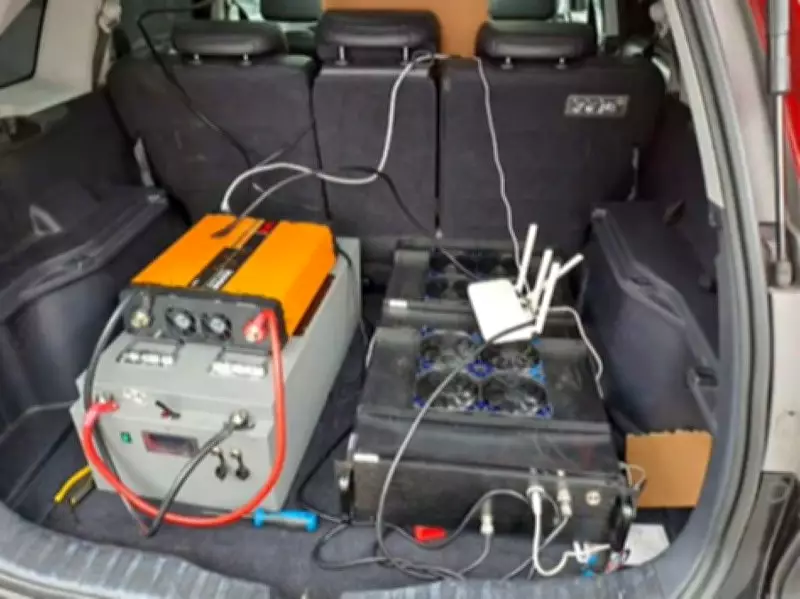
Toronto Police have arrested and charged three men with 44 offences after uncovering the use of a mobile SMS blaster, a sophisticated cybercrime tool previously undetected in Canada, to spam cellphones across the city.
Deputy Chief Robert Johnson announced the milestone investigation, dubbed Project Lighthouse, during a press conference on Thursday, calling it a first for the country. The operation involved the RCMP, York Regional Police, Hamilton Police, major financial institutions, and telecommunications companies.
How the SMS Blaster Works
Johnson described the device as a sophisticated tool designed to mimic a cellular tower, intercepting connections and sending fraudulent text messages directly to phones. The technology forces nearby cellphones to connect to it instead of a legitimate network, allowing fraudsters to send messages that appear to come from trusted organizations like banks or service providers.

These messages often contain links to fake websites aimed at stealing personal, financial, or login information, a tactic known as smishing. Johnson noted that the device can also disrupt emergency calls, potentially preventing people from contacting police, firefighters, or paramedics.
Scale and Impact
What makes this case particularly concerning, Johnson said, is its scale. The blaster had the ability to reach thousands of devices simultaneously, posing significant financial and public safety risks. Investigators recorded thousands of mobile devices connecting to the blaster and over 13 million network disruptions over several months.
The investigation began last November after a cybersecurity partner alerted police to a mobile SMS blaster traced to downtown Toronto. The device was later detected moving across various locations in the Greater Toronto Area.
Arrests and Charges
On March 31, police executed search warrants at residences in Markham and Hamilton, arresting two men and seizing several mobile SMS blasters along with a significant amount of electronic evidence. A third suspect turned himself in on Tuesday.
The accused are:
- Dafeng Lin, 27, of Hamilton, charged with 24 offences including mischief, mischief endangering life, personation, fraud, and possession of instruments for forgery.
- Junmin Shi, 25, of Markham, charged with 13 offences including mischief to data, mischief endangering life, personation, and possession of property obtained by crime over $5,000.
- Weitong Hu, 21, of Markham, charged with 7 offences including conspiracy, intercepting private communication, trafficking identity information, and unauthorized possession of credit card data.
Johnson emphasized that while the technology is new to Canada, the goal remains the same: gaining access to personal and financial information. He urged the public to remain vigilant against unsolicited messages, never clicking links or sharing personal data.