Raising honey bees in Alberta is far from a simple task, with recent years seeing more than 40 percent of hives dying off. A study by the Canadian Association of Professional Apiculturists found 41.8 percent of Alberta hives died in the 2024-2025 winter, highlighting the urgent need for innovative solutions.
Calgarians faced record-breaking warm temperatures in January, heavy snowfall in February, and dumps of the white stuff replaced April rain, all of which negatively impacted hives. But a local group of innovators notes pollinators can play a role in encouraging higher survival rates and is raising awareness of the issue on World Bee Day, Wednesday, May 20.
High-Tech Bee Houses
Herman Van Reekum, founder of Beekeeping Innovations Ltd., has created a high-tech bee house called a BeeCube to shelter hives from this harsh climate. The first building prototype went up in 2024, he added new cubes in 2025, and will build more this year as he advances his research program.

“With these structures we’re not subject to the weird weather events Alberta is prone to,” says Van Reekum, adding, “everything we do is to extend the season.”
Promising Results
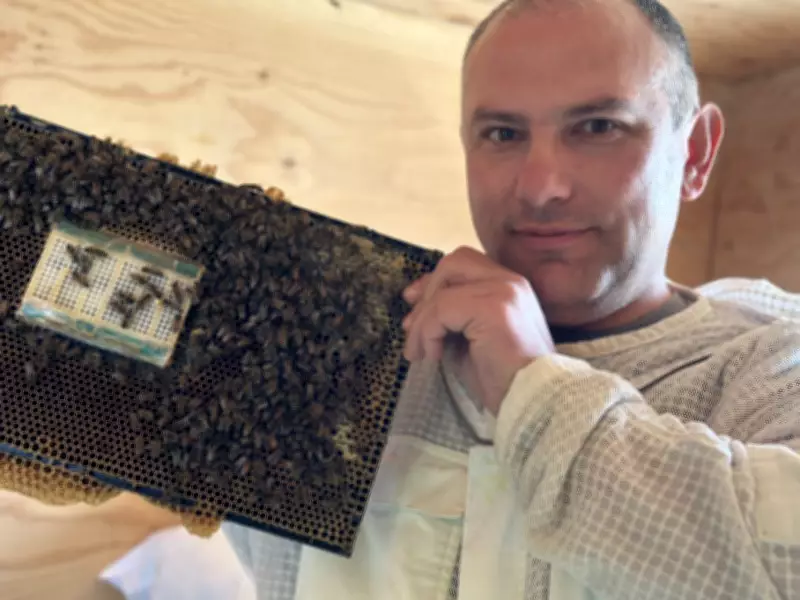
In April, lead beekeeper Nazar Pukshyn pulled a wooden frame from one of the eight hives in an Okotoks area cube, hundreds of bees wiggling around their queen. This queen was bred last fall, artificially inseminated by Pukshyn to produce a hardier insect. A steady hum filled the building, evidence the bees were content and feeling strong as they wait for early pollen sources to bloom.
After losing most of his bees the previous winter, Van Reekum is happy all hives in this cube survived and are making brood (eggs, larvae, and pupae) faster than bees without the benefit of this wooden shelter. Pukshyn says, “This BeeCube had five frames of brood in March, my other colonies outside had only 2 frames of brood.”
Queen Breeding Efforts
Most queen bees born in Alberta aren’t ready until June, so Nazar Pukshyn and his wife and master beekeeper, Natalia Pukshyn, created a bank last fall of approximately 90 queens, hoping to overwinter them and start hives sooner. “We want to get queens as early as we can,” Van Reekum says, “because the earlier we get them, the stronger the hives will be.” Many queens in the bank died but 20 survived, and with them, greater knowledge of what worked and what needs improvement.
“Here, we are students,” says Pukshyn, “this project is not for one year, this is for five or more years because every year is different.”
Learning and Adapting
“We’ve learned a lot,” Van Reekum says, including the move to heat the buildings only with the warmth created by winter bees — a long-living group of bees born in fall who shiver their flight muscles to generate heat. The discovery of a virgin queen in one of the hives — bees need mated queens to produce brood — resulted in the hive producing drones in March, weeks earlier than normal, and led Van Reekum to conclude they could sell virgin queens to other beekeepers at a lower cost and with better acceptance rates.
These innovations offer hope for Alberta's beekeeping industry, demonstrating that with creativity and dedication, the winter blues for honey bees can be overcome.