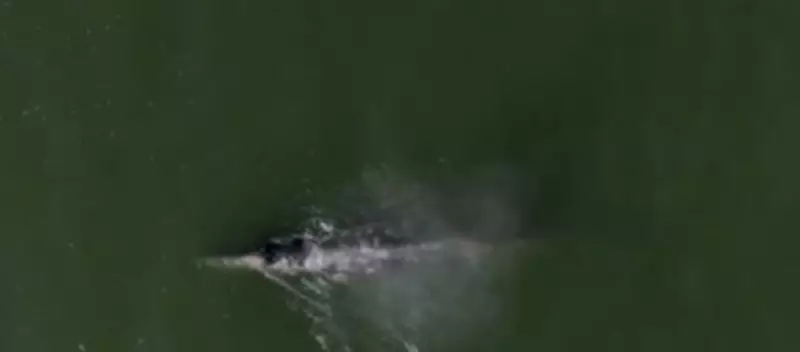
Marine scientists have reported that approximately 40 percent of gray whales that die in San Francisco Bay are killed in collisions with ships. In response, researchers are now employing artificial intelligence to track whale heat signatures in an effort to prevent these deadly encounters.
AI-Powered Whale Detection
The new system uses thermal imaging cameras mounted on ships and drones to detect the heat signatures of whales near the water's surface. The data is then processed by AI algorithms that can identify whale locations in real time and alert vessel operators to adjust their course or speed.
Significant Threat to Gray Whales
Ship strikes are a major cause of mortality for gray whales, which migrate annually along the California coast. The San Francisco Bay is a particularly dangerous area due to heavy shipping traffic and the presence of feeding grounds for the whales.

Scientists hope that this technology will significantly reduce the number of collisions, protecting the whale population and ensuring safer navigation for ships. The project is still in its early stages, but initial results have been promising.
Broader Implications for Marine Conservation
This initiative is part of a larger effort to use technology for marine conservation. Similar systems are being developed for other regions and species, including North Atlantic right whales, which are also at high risk from ship strikes.
By leveraging AI and thermal imaging, researchers aim to create a scalable solution that can be deployed globally to protect marine life from the threats posed by maritime traffic.