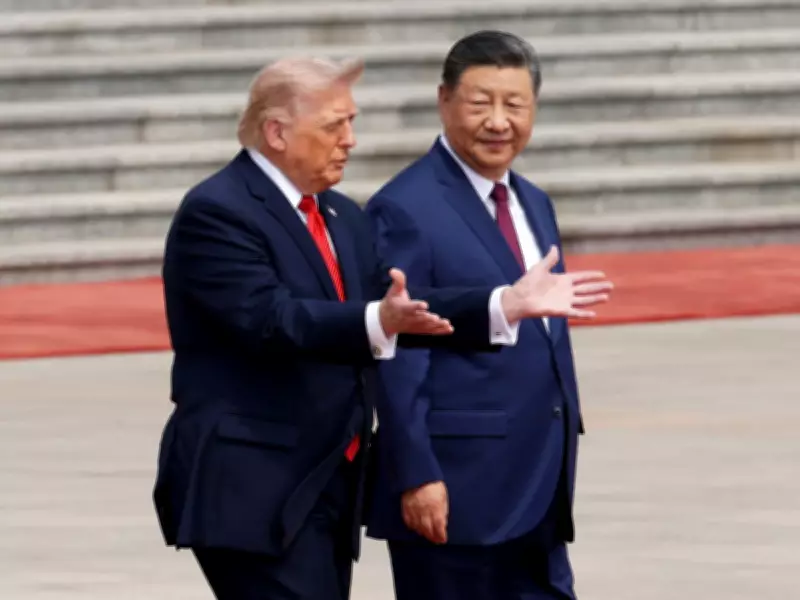
The dramatic rise of China's annual GDP per capita to US$14,000 today from less than US$1,000 in 2000 has long fueled heated economic and political debate. This debate hovered in the background as U.S. President Donald Trump and Chinese leader Xi Jinping met for a summit in Beijing on May 14.
Capitalist or Socialist?
One could reduce the issue to the question: Which leader is more capitalist? If Ronald Reagan had met Xi, the answer would have been clear. Between Trump and Xi, it appears more of a toss-up.
Contrasting Ideological Views
The real question was posed by two writers with contradictory ideological positions. On the left, Owen Schalk wrote in Canadian Dimension asking whether China is capitalist or socialist. He concluded China is socialist, despite declining social development and rampant inequality. On the right, economist David Friedman wrote "How China Went Capitalist," reviewing Ronald Coase's book How China Became Capitalist. Coase traced China's evolution from Mao's totalitarian socialism toward capitalism, including private enterprise and individual freedom.

Economic Transformation
Coase and Friedman argue that capitalism under the banner of socialism drove China's growth. China's first stock exchange opened in 1990 in Shanghai, now listing over 2,300 companies, representing the world's largest market capitalism. The summit highlighted this tension, with Trump stating that "the great rejuvenation of the Chinese nation and making America great again can go hand in hand."
Resolving whether China is capitalist or socialist will be a key determinant of future global economic structures.