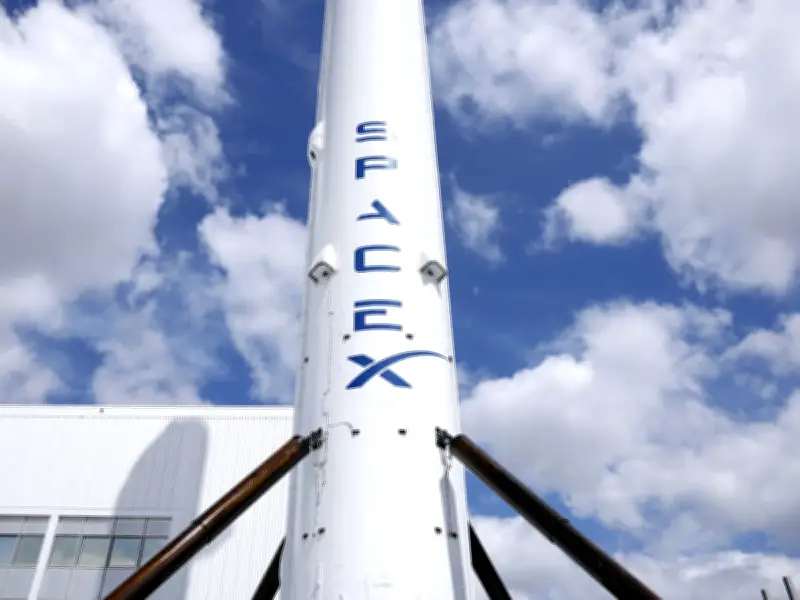
SpaceX is aiming to raise $75 billion in an initial public offering that would be the largest in history, as Elon Musk's aerospace and artificial intelligence company prepares for a landmark debut that could pave the way for more mega-listings.
The Starbase, Texas-based company plans to offer approximately 555.6 million shares at $135 each, according to its filing with the U.S. Securities and Exchange Commission. At that price, SpaceX would have a market value of nearly $1.77 trillion based on the outstanding shares listed in the filing.
Unprecedented Fixed Price Strategy
Musk's decision to set a fixed share price ahead of order-taking is highly unusual for large U.S. IPOs, contrasting with the typical practice in Europe and Asia. Most companies announce a price range and gauge demand during investor presentations, often pricing at the top or above to build excitement. Only a few very small firms skip this demand-assessment step.

Comparison to Past Record
At $75 billion, SpaceX's IPO would easily surpass Saudi Aramco's record $29.4 billion listing in 2019. This landmark event could open the door for other AI-focused companies, such as OpenAI and Anthropic PBC, which are expected to pursue multi-billion-dollar IPOs of their own later this year, capitalizing on strong investor appetite for AI themes.
Including employee stock options and restricted stock units, SpaceX's fully diluted value would be at least $1.8 trillion. This compares to a valuation of $1.25 trillion in February, when SpaceX acquired Musk's AI business xAI, as reported by Bloomberg News. At $1.8 trillion, SpaceX would be larger than all but six companies in the S&P 500 Index and exceed Musk's own Tesla Inc.
Share Sale Timeline
The share sale is scheduled for June 11, with trading expected to begin the following day, according to deal terms seen by Bloomberg News. The filing sets the stage for SpaceX to start its formal marketing process on Thursday, where Musk and executives will pitch investors on the company's grand ambitions. These include not only orbital AI computing at scale but also expanding its direct-to-cell wireless business, ramping up AI semiconductor production with Tesla, and eventually building bases on the Moon and a colony on Mars.
Financial Performance and Challenges
SpaceX faces the challenge of aligning its lofty goals with recent financial results. The company reported a net loss of $4.94 billion last year on revenue of $18.7 billion, compared to net income of $791 million on $14 billion in revenue in 2024, according to the filing. The filing also reveals that SpaceX signed a contract with Anthropic to provide AI computing services for $1.25 billion per month, which could help offset the heavy cash needs of its AI business. Both parties can terminate the agreement with 90 days' notice. Musk noted on X on May 28 that SpaceX has not committed to leasing computing power for years, though it remains a possibility.