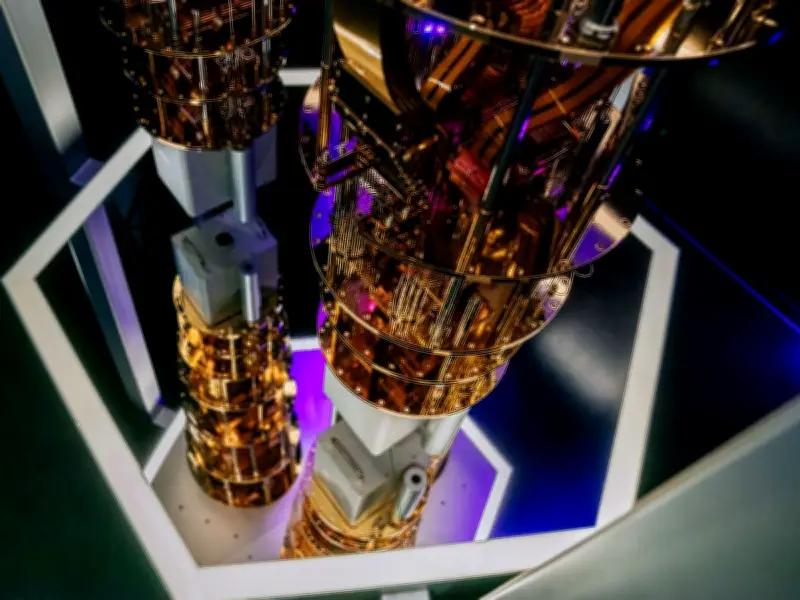
Deep inside a data centre in Manhattan, a quantum computer is enshrined in an alcove like an idol. To reach it, visitors pass two sets of sliding doors and banks of the conventional machines it is predicted to surpass.
The computer's maker, United Kingdom-based company Oxford Quantum Circuits, has installed it for companies to use via cloud or fibre connections, giving them an opportunity to experiment with the technology first-hand. Nvidia AI hardware helps the column of copper and steel achieve extraordinary calculating powers, thanks to its ability to analyze and predict complex systems such as financial flows or chemical reactions.
Quantum Computing's Potential Impact
After years of false dawns, many of the world's leading tech companies are now betting that quantum computers will start to outperform their conventional counterparts by 2030 – with a potentially huge impact on fields ranging from cryptocurrencies and financial services to drug discovery.

Quantum computers can transcend the limitations of the traditional binary computer bit, which can only exist in two states, denoted by zero and one. This allows them to process vast amounts of data simultaneously, solving problems that are currently intractable for classical computers.
Industry Optimism and Investments
Gerald Mullally, OQC's chief executive, says the client base is a vote of faith in the technology's potential. "Essentially it's a bet that these companies are making that 'this is going to happen, it's going to matter and so the sooner we engage with it, the more practice we get,'" he notes.
Industry observers estimate there are scores of quantum computing systems in the world, a number forecast by the consultant McKinsey to rise to around 5,000 by 2030. Scientists say that advances in performance and capability will be incremental.
But investors have been enthused by developments such as Microsoft's announcement last week of its next-generation Majorana two quantum chip and its expectations of a quantum computer that can solve "commercially viable, reasonable problems" by 2029. When Honeywell-backed quantum computing company Quantinuum launched an initial public offering on Nasdaq this month, its shares were valued at more than US$15 billion. The stock price of rival group IonQ has risen more than 700 per cent since September 2024.
Google and IBM are both targeting the delivery of useful machines by 2030. Sundar Pichai, Google's chief executive, said in November that the technology was now "where maybe AI was five years ago".
Government Involvement
Governments are also making strategic investments. The United States announced plans last month to take equity stakes worth US$2 billion in nine quantum computing companies, including a start-up backed by a firm with links to the Trump family and one taken public by a Pentagon official.
Concerns and Skepticism
But some scientists worry that the sheer power of the technology could endanger privacy and national security while others still doubt that useful machines can be made at all. The potential to break current encryption methods is a major concern, as quantum computers could theoretically decrypt sensitive data.