Macron Delivers Blistering Critique of Social Media's Free Speech Arguments
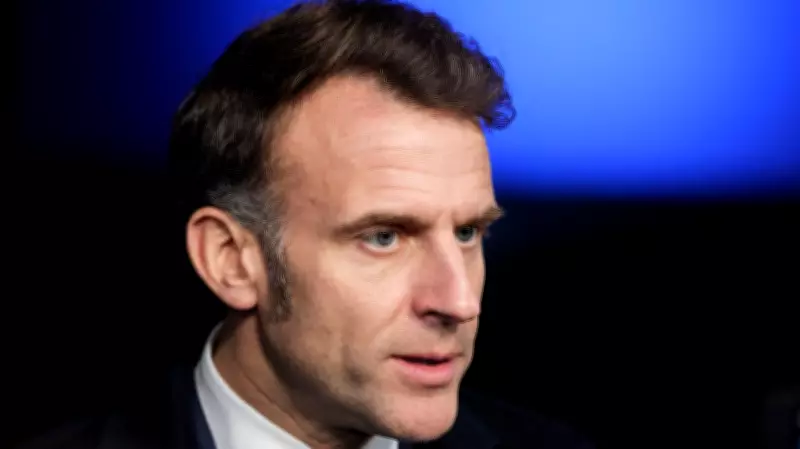
French President Emmanuel Macron has launched a scathing attack on social media platforms, dismissing their free speech justifications for controversial content as "pure bullshit." The European leader's forceful remarks, delivered during a speech in New Delhi on Wednesday, place him on a direct collision course with the Trump administration and its allies.
A Transatlantic Clash Over Digital Governance
Macron's criticism comes at a pivotal moment when European nations are actively considering legislative measures to block certain online content, particularly to safeguard children. These efforts have faced intense opposition from prominent U.S. figures, including Vice President JD Vance, Secretary of State Marco Rubio, and billionaire entrepreneur Elon Musk.
The French president specifically targeted the algorithms used by digital companies, arguing they serve as a convenient excuse for disseminating hate speech and misinformation. "They have no clue about how their algorithm is made, how it's tested, trained and where it will guide you," Macron stated, as reported by Bloomberg News. He warned that "the democratic consequences of this bias could be huge."

Escalating Regulatory Actions Across Europe
European governments are moving beyond rhetoric to concrete actions. The United Kingdom has threatened legal measures against Musk's X platform after its AI assistant, Grok, was implicated in creating nonconsensual sexual deepfakes. Simultaneously, Spain has requested prosecutors to investigate X, Meta, and TikTok for their alleged roles in producing and distributing AI-generated child sexual abuse material.
Macron elaborated on his core argument, asserting, "Free speech is pure bullshit if nobody knows how you are guided to this so-called free speech, especially when it is guided from one hate speech to another." This perspective challenges the foundational principles often cited by tech giants to resist content moderation.
American Pushback and Accusations of Censorship
The response from U.S. officials has been swift and confrontational. Secretary of State Marco Rubio recently denounced what he termed a "global censorship-industrial complex," accusing it of pressuring American technology firms to suppress domestic viewpoints. "The Trump Administration will no longer tolerate these egregious acts of extraterritorial censorship," Rubio declared in a post on X.
Vice President JD Vance amplified these sentiments during a notably hostile speech in Munich last year, where he rebuked many European allies for what he described as suppressing free speech. He labeled the European Union as "commissars" and claimed they would "shut down social media during times of civil unrest the moment they spot what they've judged to be, quote, 'hateful content.'"
Elon Musk's Vocal Opposition
Elon Musk, the world's wealthiest individual and a self-proclaimed "free speech absolutist," has emerged as a central figure in this debate. This month, he launched a personal attack on Spanish Prime Minister Pedro Sánchez following Sánchez's proposal to ban teenagers from social media platforms. Musk wrote on X, "Dirty Sánchez is a tyrant and a traitor to the people of Spain," further inflaming tensions between European regulatory efforts and American tech leadership.
The escalating conflict underscores a deepening ideological divide over the future of digital speech, algorithmic accountability, and international regulatory frameworks. As European leaders like Macron advocate for stricter oversight to protect democratic integrity and vulnerable populations, U.S. officials and tech magnates are mounting a vigorous defense of free expression principles, setting the stage for continued diplomatic and legal battles.