Decade-Long Experiment Fails to Pin Down Gravitational Constant
A decade-long experiment aimed at measuring the gravitational constant, known as Big G, has concluded without achieving the precision scientists had hoped for. The gravitational constant is a fundamental value that describes the strength of gravity, the force that holds the universe together. Despite years of meticulous work, researchers at the National Institute of Standards and Technology (NIST) were unable to narrow down its numerical value to the desired accuracy.
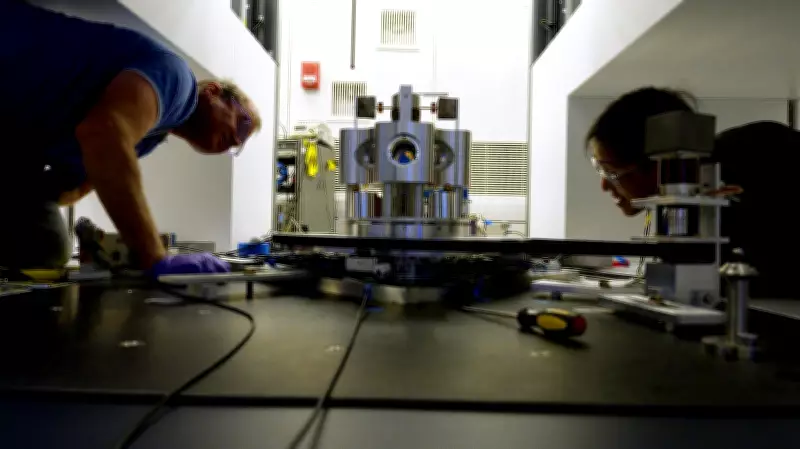
The experiment, which used a torsion balance apparatus, was led by scientists Stephan Schlamminger and Vincent Lee. The device measures the tiny gravitational attraction between masses in a controlled environment. However, persistent systematic errors and environmental noise prevented the team from obtaining a definitive measurement. The results highlight the challenges of measuring gravity, which is far weaker than other fundamental forces.
Understanding Big G is crucial for theories of physics, from Newton's law of universal gravitation to Einstein's general relativity. A precise value is needed for calculations in astronomy, geophysics, and particle physics. The failure to pin down G underscores the need for new experimental approaches. Future efforts may involve space-based experiments or novel techniques to isolate gravitational effects.

Despite the setback, the research provides valuable data that will inform subsequent studies. The scientific community remains committed to unlocking the secrets of gravity, one of the most mysterious forces in the universe.