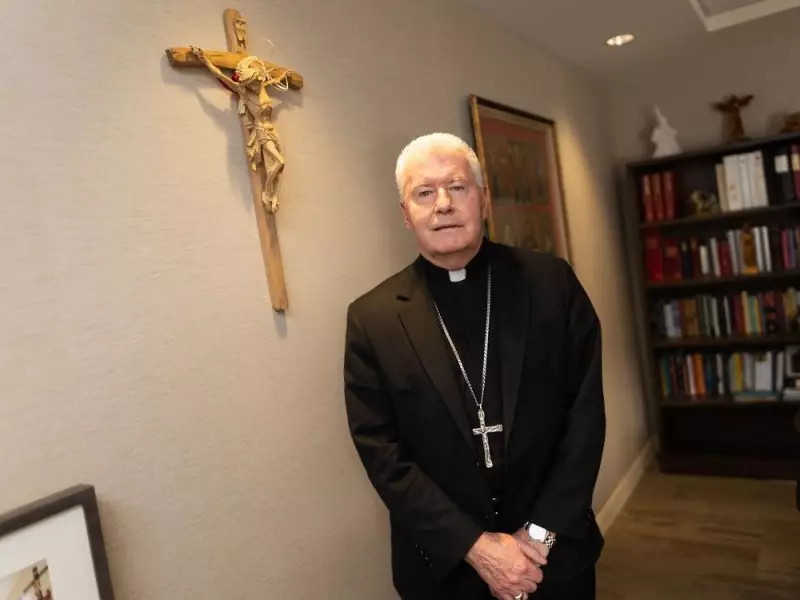
In a significant intervention into one of the most pressing technological debates of our time, a senior Catholic leader in Alberta is calling for robust ethical frameworks to guide the rapid development of artificial intelligence. Bishop William T. McGrattan of the Roman Catholic Diocese of Calgary emphasized that technology is not a neutral force and must be harnessed to serve humanity, not diminish it.
A Human-Centric Approach to Technology
In an exclusive interview with Postmedia reporter Devon Dekuyper on Wednesday, November 26, 2025, Bishop McGrattan articulated a vision where technological advancement is coupled with moral discernment. The bishop has been actively involved in numerous discussions on AI within the Catholic Church, both in Canada and internationally. His central hope is for the Church to contribute meaningfully to broader societal conversations concerning AI's ethical application and potential government regulation.
"We, as human beings, use technology, and we also have to be able to understand it, but also to apply it such that it does not impact negatively the human person, their flourishing or society," McGrattan stated. He argued against a purely utilitarian mindset, warning, "It shouldn't have an imperative that says, 'If we can do it, we must do it.'" Instead, he advocates for a measured approach where ethical questions are paramount.

Multifaceted Concerns: From Jobs to the Environment
The bishop's concerns extend far beyond theological circles, focusing on the holistic impact of AI on human society. He highlighted several critical areas where ethical guardrails are urgently needed. These include the potential displacement of workers, the influence of AI on family dynamics and community life, and the broader societal implications of unchecked technological adoption.
Notably, McGrattan pointed to a specific Alberta-centric issue: the environmental footprint of the massive infrastructure required to power AI data centres. "Here in Alberta, we have to also look at it from the development of the infrastructure that's needed to support AI. That's a big issue that has impact on the environment," he explained. This aligns the ethical debate with practical concerns about energy consumption and sustainability in the province.
Joining a Global Conversation
The Catholic Church, through voices like Bishop McGrattan's, is engaging with the same complex questions being debated by governments, tech companies, and ethicists worldwide. McGrattan acknowledges AI's potential as a useful tool in many fields but stresses the necessity for public awareness regarding both its benefits and its risks.
"That's one of the things that is important for us as people in society, and also as Christians and Catholics: what is the potential for AI, and what is guiding that?" he questioned. The underlying message is clear: technology must assist people and society, preserving what makes us uniquely human, rather than undermining it. As AI continues its rapid evolution, the call from Calgary is for a development path guided by wisdom, caution, and a steadfast commitment to human dignity.