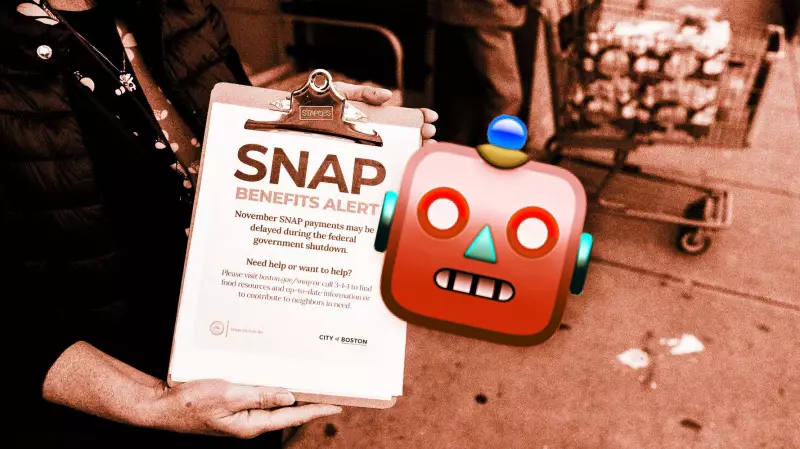
A disturbing new wave of artificial intelligence-generated videos is circulating on social media, spreading racist stereotypes and dangerous misinformation about the 41 million Americans who rely on the Supplemental Nutrition Assistance Program (SNAP), commonly known as food stamps.
The Digital Resurgence of a Harmful Stereotype
If you are active on platforms like TikTok or YouTube, your feed may have been infiltrated by seemingly realistic clips, many created by AI apps like Sora. These videos predominantly feature Black women, deliberately cast in scenarios designed to provoke outrage. They are shown loudly arguing with retail employees over declined Electronic Benefit Transfer (EBT) card payments, stealing from grocery stores, or boastfully claiming to be financially set
due to public assistance from having children with multiple fathers.
HuffPost contacted OpenAI to inquire if this content violates its standards for Sora-generated videos but did not receive a response. The critical issue is that even when these videos are obviously fake, they successfully capture attention and reinforce pernicious stereotypes.

The comments on these videos reveal their damaging impact. Viewers, believing the scenes to be real, leave remarks like Free ride is over,
or That’s why the government is taking [SNAP] away.
This content blurs the line between fact and fiction, confirming the worst biases some people hold about those receiving public assistance.
The Facts Versus the AI Fiction
Contrary to the narrative pushed by these viral AI clips, the data tells a very different story. According to the Pew Research Center, the majority of SNAP recipients are not Black. In 2020, white individuals accounted for 44.6% of adult SNAP recipients and 31.5% of child recipients. Meanwhile, Black adults constituted 27% of recipients, Latine adults 21.9%, and Asian American adults just under 4%.
The welfare queen
trope itself originated from a real-life figure from the 1970s, Linda Taylor, a Chicago woman of ambiguous race who defrauded the government. Her story was amplified in Ronald Reagan's presidential campaigns, creating an indelible, inaccurate impression of public aid recipients,
as writer Josh Levin noted.
In reality, SNAP fraud is exceptionally rare. A 2018 Congressional Research Service report found that for every 10,000 households on SNAP, only about 14 had a recipient who was investigated and confirmed to have committed fraud.
People are not making these big bucks on welfare, so this kind of fundamental premise is flawed,
said Tom Mould, an anthropology and folklore professor at Butler University. He explains that the myth persists because the image of a Black woman getting all this government aid that she does not need
creates a perfect storm for class resentment.
If you hear a story that feeds that lingering, sometimes subconscious, sometimes very-conscious racial animosity, you’re going to latch on to it, and you’re going to share it, and you’re going to say, ‘Here’s proof. See, I knew it,’
Mould stated.
Real-World Consequences and How to Fight Back
The circulation of these videos is far from a neutral event; it has tangible, harmful effects. The stigma can prevent people from accessing the help they need, and it directly shapes public policy.
The really damaging outcome is [the welfare queen stereotype] shapes our public policy,
Mould said, citing how these tropes influenced the contentious 1996 welfare reform debate. He notes that when lawmakers propose new SNAP restrictions, they are often based on the false assumption that recipients are buying luxury items like steak.
Even news organizations have been fooled. Fox News initially ran a headline reading SNAP Beneficiaries Threaten to Ransack Stores Over Government Shutdown
before amending it to clarify the videos were AI-generated, highlighting the pervasive confusion.
So, what can be done? Experts like Jeremy Carrasco, who debunks AI videos online, argue that public shaming is an effective tool. He describes these clips as rage bait
designed to get viewers emotionally riled up and drive engagement.

Just because it’s legal or not against a [platform’s] rule, doesn’t mean it’s moral,
Carrasco said. That’s when it’s up to public shaming and public outcry to be like, ‘No, you shouldn’t do that.’
The best action for social media users is to be extra cautious, call out misinformation when they see it, and limit the reach of this viral AI slop. The psychological and political damage caused by these stereotypes is too significant to ignore.