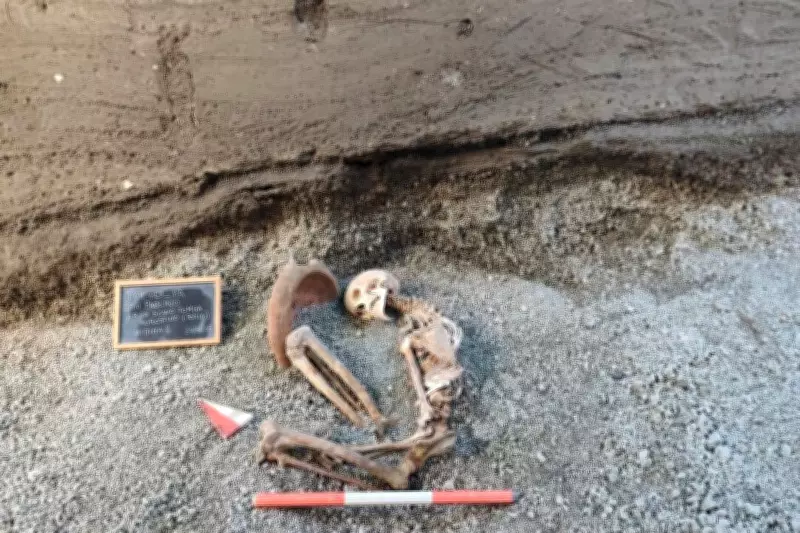
Archaeologists have employed artificial intelligence to recreate an image of a victim of the catastrophic AD 79 eruption of Mount Vesuvius, which buried the ancient Roman city of Pompeii. The image was released by the Italian Culture Ministry on Monday, April 27, 2026, showcasing the remains of a person who perished in the volcanic disaster near Naples in southern Italy.
AI Technology in Archaeology
The use of AI in archaeology is revolutionizing how researchers study historical sites and artifacts. By analyzing skeletal remains and other evidence, AI algorithms can generate detailed visual representations of individuals from the past. This particular reconstruction offers a glimpse into the life of a Pompeii resident, providing a poignant connection to the tragedy that unfolded nearly 2,000 years ago.
Significance of the Discovery
The image not only humanizes the victims of the eruption but also aids archaeologists in understanding the demographics and health conditions of Pompeii's population. The Italian Culture Ministry emphasized the importance of combining technology with traditional archaeological methods to preserve and interpret cultural heritage.

Pompeii remains one of the most significant archaeological sites in the world, with ongoing excavations uncovering new insights into Roman life. The AI-generated image is part of broader efforts to document and share findings with the public.
Broader Context
This development coincides with other news stories, including global tensions affecting agriculture, economic updates from the Bank of Canada, and advancements in AI across various fields. The intersection of technology and history continues to yield fascinating results, blending innovation with the study of ancient civilizations.
The Italian Culture Ministry's release underscores the potential of AI to bring history to life, offering a vivid reminder of the human stories behind archaeological discoveries.