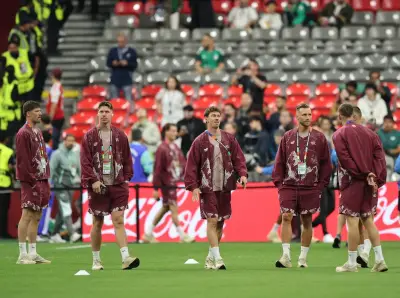
Two things can be true at once: Canada made history by winning its first men's World Cup match and reaching the knockout rounds, yet still lost 3-0 to Morocco on July 4 at the Shipyards in North Vancouver. The gap between the teams is not talent but information and investment, according to Al Vigier, a North Vancouver resident and founder of AI firm Caseway.
A Historic Tournament Ends with a Harsh Lesson
Azzedine Ounahi scored just after halftime and added another late, and Soufiane Rahimi finished it in stoppage time. The crowd of thousands in red jerseys—many with Davies on the back—went from roaring to groaning, then to a quiet, collective exhale of people recalibrating in real time. Nobody left angry. Everyone understood the context: a first win, a first trip out of the group, a team that left Qatar without a point in 2022 making history at home in 2026.
The scene at the Uber Eats Canada Soccer House was hard to reconcile with the scoreline. A lineup of red stretched down the waterfront past the old yellow crane. Under a canopy, a screen the size of a house, families on blankets, a Canadian flag large enough to park a truck under, and a Telus lounge overlooking Burrard Inlet. DJ Pri kept several thousand nervous fans dancing between broadcast cuts.

Morocco's Blueprint: A Decade of Unglamorous Work
Vigier, who runs an AI company, read the game as a business case. Morocco did not get good by accident. The kingdom opened the Mohammed VI Football Academy in 2009 and spent more than a decade funding pitches, coaches and player pathways before it paid off with a World Cup semifinal run in 2022. Thirteen years of unglamorous, compounding work before the world noticed. You do not get outclassed by luck; you get outclassed by someone who started their boring, disciplined work earlier.
Two things can be true at once: you can make history and still lose 3-0. Any founder knows the feeling—hitting a milestone, finally getting in the room, then meeting a competitor a decade ahead. The gap is suddenly, painfully visible. But the gap is information. Morocco just handed Canada the most detailed roadmap it has ever received, free of charge.
What Canada Must Do Next
First, keep the coach. Last May, Jesse Marsch signed an extension through the 2030 World Cup, funded partly by the Whitecaps ownership, so the continuity Morocco enjoyed for a decade is finally on the table. Second, fund the pipeline. Canada Soccer wants to build a national training centre—a $250-million to $300-million home for the program—and is planning a residency for the country's best teenagers modelled in part on Morocco's academy. Third, treat the legacy money as seed capital, not a victory lap. Kevin Blue, who runs Canada Soccer, calls the World Cup a jumping-off point. That is the right instinct. Now comes the boring, disciplined part.
Progress is not linear, but it is real. The proof was not on the screen; it was in front of it. Thousands of people in red, in a shipbuilding district that reinvented itself, watching a program that reinvented itself. The music was ours, the venue was ours, and soon enough the results will be too. Vigier promised to be back in the lineup, and so will the kid in the Davies jersey who stood in front of him. That is how you build something.