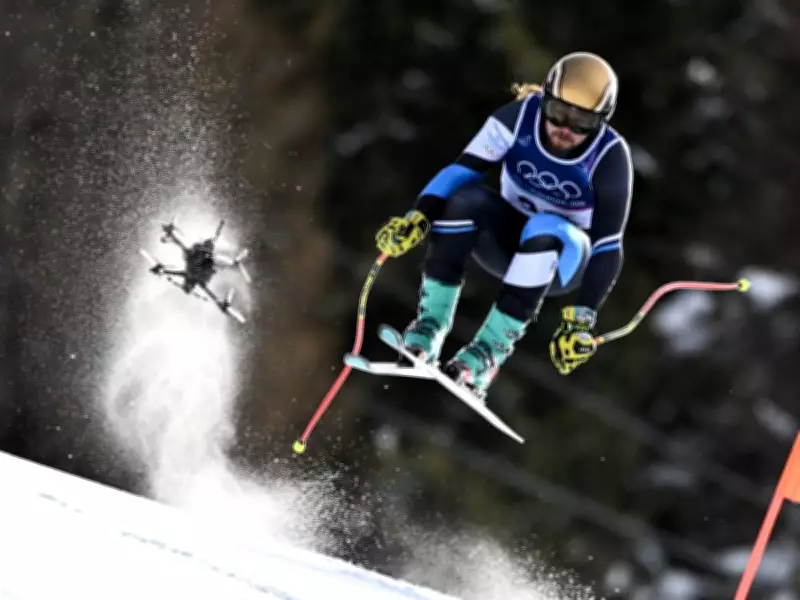
Drone Cameras Take Center Stage at Milano-Cortina 2026 Winter Olympics
The persistent hum of spinning propellers has become an unexpected soundtrack to the 2026 Winter Olympics in Milano-Cortina, Italy. This buzzing noise signals the extensive deployment of first-person view drone cameras that are revolutionizing how audiences experience winter sports events.
Unprecedented Aerial Perspectives Transform Viewing Experience
For spectators watching downhill skiing, Big Air snowboarding, or luge competitions during the opening days of the Games, the distinctive sound of drones has become unmistakable. These aerial devices follow athletes closely, capturing dynamic footage from angles previously impossible with traditional camera setups.
International Olympic Committee sports director Pierre Ducrey emphasized the organization's commitment to enhancing viewer experiences while prioritizing athlete performance. "We strive to offer the best viewing experience whether in the stadium or outside," Ducrey stated. "We believe that the drones do not impact significantly the experience of the athletes. We have looked into it to make sure it doesn't."

Athlete Feedback and Safety Considerations
The IOC has actively sought athlete input regarding drone operations, conducting thorough assessments to ensure the technology doesn't interfere with competitors' performances. While most athletes have adapted well to the aerial companions, officials acknowledge that individual sensitivity varies.
"Maybe some people are more sensitive than others," Ducrey noted. "We are trying to make sure that the way we improve broadcasting of the Games is certainly not an obstacle for the performances of the athletes."
Despite generally smooth operations, one incident occurred during early downhill training sessions when a drone crash-landed on the course. Fortunately, this was classified as a minor event that didn't affect any competitors.
Mixed Reactions from Viewers and Historical Context
Not all spectators have embraced the technological advancement. Social media user Billy Newport expressed frustration on platform X, writing: "I think the sound of the Winter Olympics outdoor events is drones rushing around, I don't like the sound intruding on events (no issue with using drones but there must be a way to remove the noise)."
While drones made their Olympic debut at the 2024 Paris Summer Games, their implementation at the 2026 Winter Olympics represents a significant expansion of aerial broadcasting technology. The current Games feature more extensive drone coverage than any previous Olympic event.
Canadian Connection and Future Implications
For Canadian audiences, the prominent drone presence recalls the 2024 controversy involving Canada's women's soccer team. Support staff members were dismissed after using a drone to record a New Zealand practice session during the Paris Olympics, creating what became known as the "Soccer Canada drone scandal."
As the Milano-Cortina Games progress, broadcasting experts anticipate that camera drones will become increasingly commonplace at future Olympic events. The technology offers viewers immersive perspectives that traditional cameras cannot match, particularly for fast-paced winter sports where athletes reach remarkable speeds.
The drones provide audiences with a genuine sense of velocity as skiers descend mountains and snowboarders execute aerial maneuvers, all while maintaining safe distances from competitors. This technological evolution represents another step in the ongoing quest to deliver increasingly engaging Olympic broadcasts to global audiences.