The Olympic Dream: Triumph and Tragedy on the World Stage
The Milano Cortina 2026 Winter Olympics have delivered a powerful narrative of athletic extremes, where Canadian competitors have experienced both the pinnacle of achievement and the depths of disappointment within moments of each other. The Games continue to showcase how elite athletes walk a precarious line between eternal glory and sudden heartbreak.
Lindsey Vonn's Dramatic Olympic Exit
The enduring image of these Games may well be the canary yellow helicopter soaring away from the Italian Alps, with a tiny red stretcher containing legendary skier Lindsey Vonn dangling far below. This scene captured both the quintessential Vonn spirit and the harsh realities of Olympic competition in the 21st century.
Vonn's Olympic journey ended after barely thirteen seconds in the downhill event when she clipped a gate that spun her violently to the right, sending her into a sickening slide down the mountain. The medical diagnosis confirmed surgery would be required to repair a fractured left leg, while the psychological wounds would need their own healing time.

"It was both quintessential Vonn and a distillation of the Olympic movement," observed veteran sports journalist Jack Todd. "The great and greatly flawed athlete, her hubris and courage on display in equal measure, pursuing glory and the spotlight one last time with the world watching."
Remarkably, Vonn had chosen to race just nine days after tearing her ACL, demonstrating either extraordinary courage or questionable judgment depending on one's perspective. Some viewed her decision as heroic dedication, while others questioned whether her pursuit of personal glory overshadowed her teammates and fellow competitors.
Canadian Success Stories: Precision and Perseverance
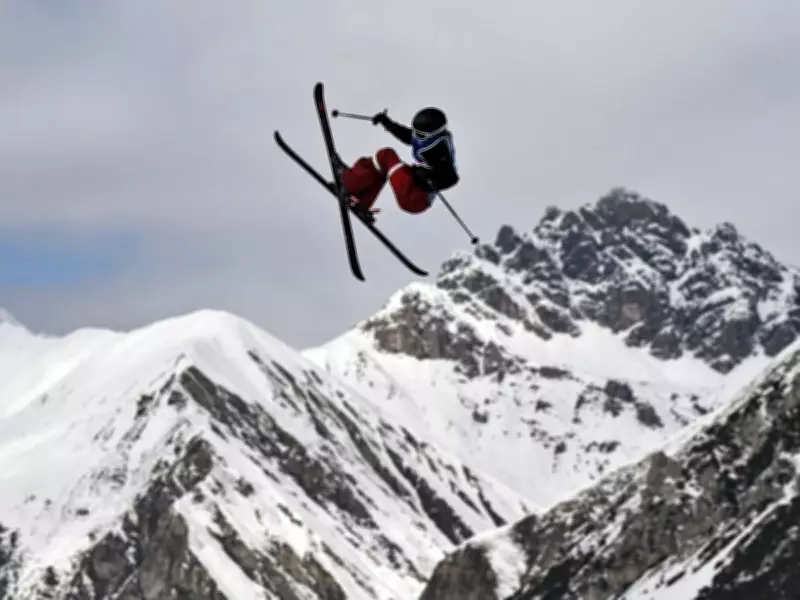
While Vonn's story captured headlines for its dramatic conclusion, Canadian athletes were writing their own narratives of success through precision and perseverance. Megan Oldham provided one of the most compelling comeback stories of the Games during the freeski slopestyle competition.
After crashing badly on her second run and limping off the course, Oldham's Olympic dreams appeared shattered. However, in freeski slopestyle, only the best run counts toward the final score. Oldham saved her finest performance for last, executing a brilliant third run that earned her the bronze medal by a fraction of a point ahead of Great Britain's Kirsty Muir.
"We're guessing that Oldham has a few bruises today, but that weighty hunk of bronze cures many a bruise," Todd noted, highlighting how Olympic success can instantly transform pain into triumph.
The razor-thin margins of Olympic competition were further emphasized when Canadian snowboarder Arnaud Gaudet missed qualifying for the parallel giant slalom semifinals by just three-hundredths of a second the previous day, demonstrating how fortune can favor or abandon athletes in the blink of an eye.
Valérie Maltais: A Career of Remarkable Longevity
Another Canadian athlete writing an impressive Olympic chapter was speed skater Valérie Maltais, who at age 35 won her first individual Olympic medal in her fifth Games appearance. Maltais maintained pressure on gold medalist Francesca Lollobrigida throughout the 3,000-meter race to secure the bronze medal.
Maltais's career trajectory is particularly remarkable. She began in the chaotic world of short-track speedskating, winning a silver medal in the 3,000-meter relay at the 2014 Sochi Games. She transitioned to long-track speedskating and earned a gold medal in team pursuit at Beijing 2022 alongside teammates Isabelle Weidemann and Ivanie Blondin.
Despite her impressive resume and historic achievement, Maltais initially received minimal recognition during the broadcast coverage, with commentators focusing extensively on Lollobrigida's home-soil victory and silver medalist Ragne Wiklund before acknowledging the Canadian bronze medalist.
"When they send you all the way to Italy to cover an event, you have one job: Tell us when a Canadian athlete wins a medal," Todd remarked about the broadcasting oversight.

The Olympic Experience: Emotional Extremes
The Milano Cortina Games continue to demonstrate how Olympic competition represents the ultimate test of athletic and emotional endurance. Canadian athletes have experienced the full spectrum of outcomes:
- Megan Oldham transforming potential disaster into bronze medal success
- Valérie Maltais achieving individual Olympic glory after decades of dedication
- Naomi Urness of Mont-Tremblant finishing a strong seventh in freeski slopestyle
- Arnaud Gaudet missing advancement by microscopic time margins
These stories collectively illustrate how Olympic competition magnifies both achievement and disappointment, compressing years of training into moments that define careers and create lasting memories. The Games continue to showcase how athletes navigate the fine line between glory and heartbreak, with success often determined by fractions of seconds or points that separate podium finishes from also-ran status.
As the Olympic fortnight progresses, new stories will emerge, new heroes will be celebrated, and new disappointments will be endured. Yet the fundamental truth remains unchanged: Olympic competition represents the ultimate crucible where athletes test their limits before the watching world, with outcomes that can elevate them to legendary status or leave them contemplating what might have been.