The World Cup shines a spotlight on the greatest players in the world's most popular sport, but also on the grand public spaces built to celebrate them. By happy coincidence, Pope Leo XIV held a prayer vigil on Monday at what is often called the 'cathedral' of global fútbol, Madrid's Santiago Bernabéu Stadium, home of the Real Madrid soccer club.
'I suppose that, for a football player, scoring a goal in this stadium is something that leaves a lasting impression for life,' Leo began extemporaneously. 'Today the Church of Madrid scored a spectacular goal for the ages!' The Holy Father used the Spanish word 'golazo,' which is what excitable announcers scream when a particularly memorable goal is scored.
The greatest 'golazo' call of them all came at the World Cup 40 years ago, when Victor Hugo Morales achieved heights of spiritual ecstasy narrating Diego Maradona's 'goal of the century' at the Estadio Azteca in Mexico City. 'Thanks be to God for Maradona, for fútbol, for these tears,' he roared, he prayed, he cried.

World Cup 2026 will open Thursday night back at the Estadio Azteca in Mexico City, which could make its own claim to be the cathedral of world soccer. This World Cup will be played for the first time in three countries — 78 games in the United States, and 13 each in Mexico (Mexico City and Guadalajara) and Canada (Toronto and Vancouver). But there was only one place to open it — the Azteca in Mexico City.
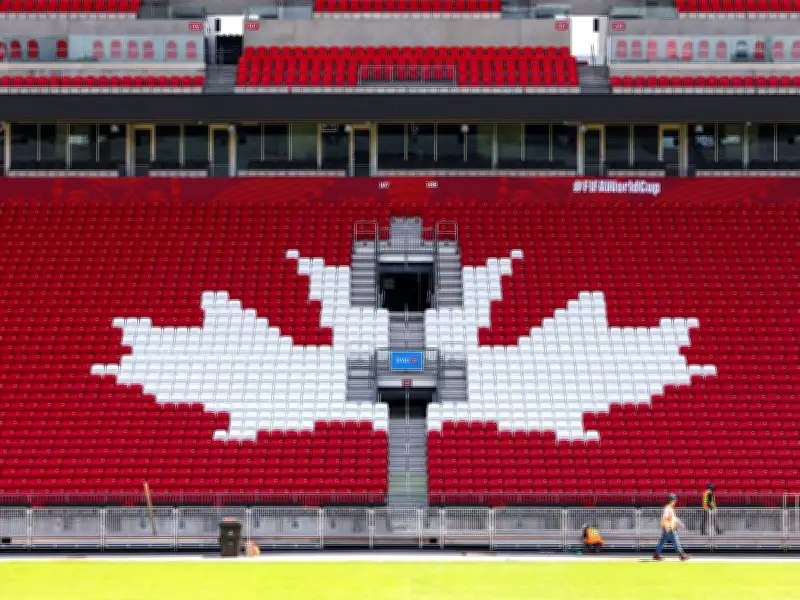
If Estadio Azteca is a cathedral, Toronto's BMO Field is the sacristy. It is remarkable that perhaps the world's most underwhelming soccer stadium will host World Cup games; the Canadian opener is there on Friday. For all those who laboured mightily for years to build a stadium small enough to suit the dwindling interest in the Toronto Argonauts and the modest interest in Major League Soccer, that the Exhibition grounds are now hosting World Cup matches is reality exceeding dreams.
Canada's other host site, BC Place in Vancouver, was designed to be grand from the beginning, built for Expo '86 — the same year that Maradona and Argentina won the World Cup at Azteca in Mexico. It had a giant pillow roof at the beginning, now retractable on cables, and was the main site for the 2010 Winter Olympics.
It's a shame that Canada's great stadium innovation of the 1980s — the then SkyDome — is not being used for this World Cup. It seems past its heyday now, but the Azteca is older but still vibrant, opening 60 years ago, in 1966 for the Mexico Olympics in 1968.
When the World Cup opens, the memories that lie there will rise again. There was Maradona's career-within-a-single-game, the 1986 quarter-final against England. Four years after the Falklands War, his two goals — the 'Hand of God' and the 'Goal of the Century' — just minutes apart defined the tormented soul of the century's second greatest soccer player, cunning, crafty, corrupt and stunningly capable all at once.
Estadio Azteca was the first stadium to host two World Cup Finals — Argentina's 1986 victory and Brazil's in 1970. The latter was won by the greatest player of the 20th-century, Pelé. That year the Azteca hosted what are regarded as two of the finest World Cup matches ever.