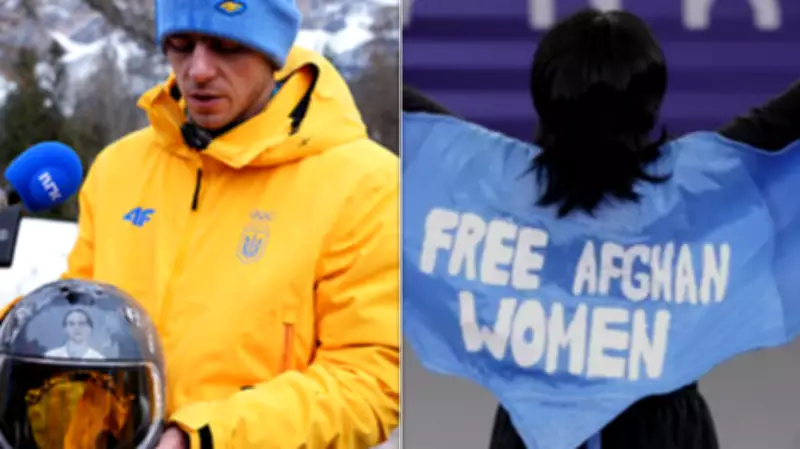
In a move that underscores the ongoing tension between athletic competition and political expression, Ukrainian skeleton racer Vladyslav Heraskevych was disqualified from the Milan-Cortina Games on Thursday. The International Olympic Committee (IOC) ruled that his helmet, featuring images of athletes killed in the war against Russia since Moscow's invasion of Ukraine in 2022, violated article 50 of the Olympic Charter, which prohibits political displays. This incident is not isolated, as history shows a pattern of Olympic athletes facing penalties for protest gestures.
Recent Cases of Olympic Disqualifications for Political Protests
Heraskevych's forced forfeit follows a series of similar incidents at recent Games, highlighting the IOC's strict enforcement of its apolitical stance. Here are key examples:
2024 Paris Summer Olympics – Manizha Talash (Refugee Olympic Team, Breaking)
B-girl Talash, an Afghan athlete based in Spain and representing the refugee team, was disqualified after displaying the slogan "Free Afghan Women" on a cape during her routine at the Place de Concorde. Initially, she lost her opening contest, but the result was later changed to a disqualification by the World DanceSport Federation, which cited the display of a political slogan on her attire as the reason.

2021 Tokyo Summer Olympics – Fethi Nourine (Algeria, Judo)
Nourine withdrew from the judo competition to avoid a potential bout with an Israeli opponent, Tohar Butbul. This was not his first such action, as he had also pulled out of the 2019 World Championships for the same reason. The Algerian Olympic Committee revoked his accreditation and sent him home, and the International Judo Federation subsequently suspended him and his coach for 10 years.
2016 Rio Summer Olympics – Islam El Shehaby (Egypt, Judo)
El Shehaby was reprimanded and sent home by his team after refusing to shake hands with an Israeli opponent, Or Sasson. The IOC Disciplinary Commission ruled that his conduct violated Olympic values, with reports indicating he faced social media pressure to avoid the match.
2004 Athens Summer Olympics – Arash Miresmaeili (Iran, Judo)
Miresmaeili forfeited his bout by missing weight ahead of a scheduled match against an Israeli opponent, framing it as a political protest. Later, as head of Iran's judo federation, he oversaw a suspension in 2018 for pressuring a fighter to withdraw to avoid facing an Israeli opponent.
Historic Protests and Their Consequences
Beyond recent years, Olympic history is marked by notable protests that led to severe penalties:
1972 Munich Summer Olympics – Vince Matthews and Wayne Collett (United States, Athletics)
After winning gold and silver in the 400 meters, Matthews and Collett protested racial injustice by chatting casually and not standing at attention during the U.S. national anthem. They turned their backs to the flag, with Collett barefoot and holding his shoes. The IOC called it "a disgusting display" and imposed lifetime bans, later lifted, with Collett explaining he couldn't sing the anthem due to his beliefs about America.
1968 Mexico City Summer Olympics – Tommie Smith and John Carlos (United States, Athletics)
In one of the most famous Olympic protests, Smith and Carlos raised black-gloved fists during the 200m medal ceremony to protest racial injustice in the U.S. They were told to leave the Olympic Village but retained their medals, with Smith stating the gloves represented Black America.
These cases illustrate the complex interplay between sports and politics, with Heraskevych's disqualification adding to a legacy of athletes using the Olympic stage for advocacy, often at great personal cost. As the Games continue, such incidents prompt ongoing debate about the boundaries of expression in international competition.