Super Bowl Showdown: NFL Books Green Day and Bad Bunny for Politically Charged Performances
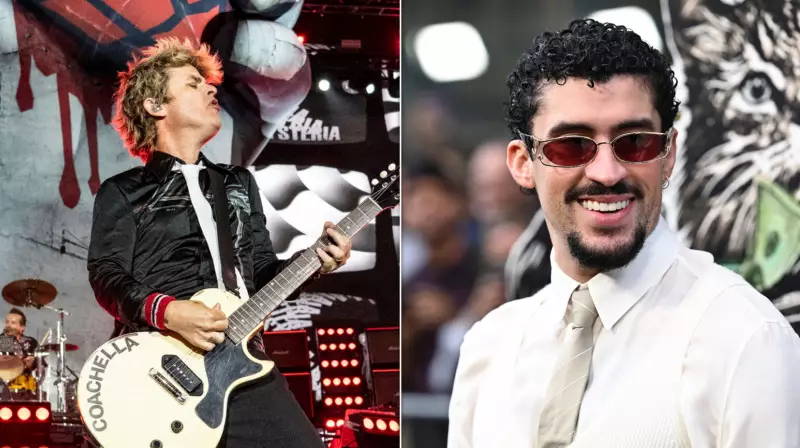
As the Super Bowl approaches, anticipation is building not just for the game, but for what promises to be a culturally significant spectacle. The NFL has strategically booked two acts—Bad Bunny for the halftime show and Green Day for the opening ceremony—that are poised to ignite political discourse and challenge conservative sensibilities.
Green Day's Opening Act: A Legacy of Political Protest
Green Day, the iconic punk rock band, brings a history of outspoken activism to the Super Bowl stage. Their selection for the opening ceremony is particularly noteworthy given their track record of critiquing American politics. The band's 2004 hit "American Idiot" served as a scathing anti-war anthem during the Bush administration, and their lyrical content has consistently addressed social issues.
In a memorable 2016 VMAs performance, Green Day explicitly targeted then-presidential candidate Donald Trump by chanting "No Trump, No KKK, No Fascist USA" on national television. This bold stance underscores their willingness to adapt live performances to reflect current political climates, making their Super Bowl appearance a potential platform for commentary.

Bad Bunny's Halftime Headliner: Cultural Identity and Backlash
Meanwhile, Bad Bunny's halftime performance has already stirred controversy among conservative circles. Since the announcement last September, critics have voiced outrage over his Puerto Rican heritage and Spanish-language repertoire. Commentators like Benny Johnson have questioned the inclusion of an artist with "no songs in English," while others have mischaracterized his anti-ICE stance as "anti-American."
The backlash reached such intensity that the NFL was compelled to publicly defend Bad Bunny's booking, emphasizing his status as an American citizen from Puerto Rico. This response highlights the ongoing cultural tensions surrounding immigration and national identity in the United States.
Strategic Double-Booking: NFL's Calculated Move
The NFL's decision to pair Green Day with Bad Bunny appears deliberate, creating a juxtaposition that amplifies the political undertones of the event. On the surface, Green Day might seem to fit a more traditional "American" mold—white, English-speaking, and potentially relatable to certain demographics. However, their anti-establishment ethos aligns closely with Bad Bunny's critiques of U.S. policies.
This dual booking sets the stage for what could be one of the most politically charged Super Bowls in recent history. Both artists have demonstrated a willingness to confront authority, and their performances may resonate deeply in a polarized climate.
Broader Political Context: A Nation on Edge
The Super Bowl unfolds against a backdrop of heightened political volatility. The Trump administration's policies, including ICE operations and foreign interventions, have fueled public anxiety. Speculation about ICE presence at the event, though unconfirmed by the White House, adds to the tension.
For many Americans, the Super Bowl offers a rare opportunity to witness dissent on a massive scale. As cultural icons like Green Day and Bad Bunny take the stage, their performances may serve as a form of resistance, challenging bigotry and empowering viewers during a tumultuous era.
Ultimately, the NFL's lineup transforms the Super Bowl into more than a sporting event—it becomes a cultural battleground where music, politics, and identity converge, promising a spectacle that will be remembered long after the final whistle blows.