Marie-Philip Poulin's Olympic Future Uncertain After Emotional Loss
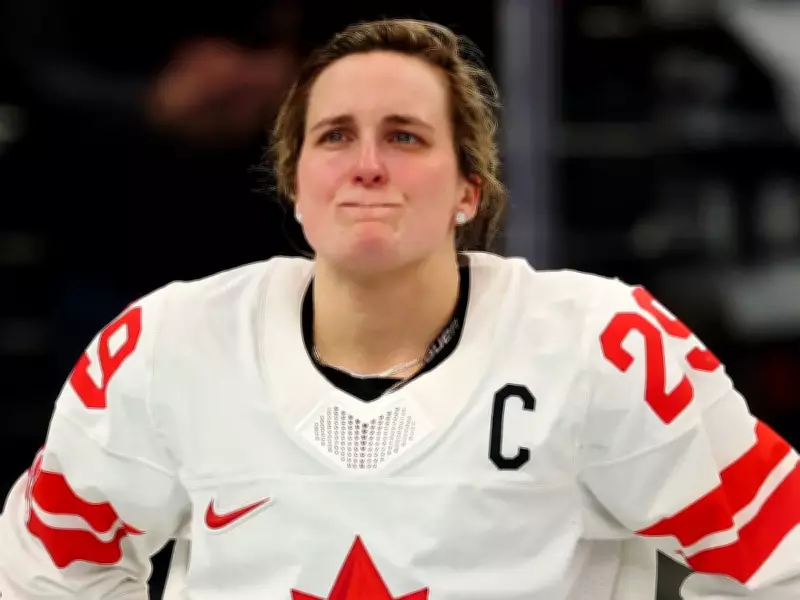
In the quiet aftermath of Canada's heartbreaking overtime defeat to the United States at the Winter Olympics, Marie-Philip Poulin sat with a red baseball cap pulled low, wiping tears from her eyes. The scene unfolded near midnight in Milan, more than an hour after what might have been the final Olympic game for the 34-year-old hockey legend.
Silence on Future Plans
When pressed by reporters about whether this marked her Olympic farewell, Poulin remained characteristically guarded. "I'm not sure yet," she stated, refusing to address specific questions about her knee injury or speculation surrounding her international career. Her teammates had already moved through the media zone at Milano Santagiulia Ice Hockey Arena, leaving Poulin to face questions alone about the painful loss.
Teammates Celebrate a Legend
What emerged instead was a powerful tribute to Poulin's extraordinary career. Canadian defender Erin Ambrose offered unequivocal praise: "She was the greatest hockey player to ever play this sport. I don't think there's any other way to put it."

Ambrose continued, highlighting Poulin's leadership qualities: "She was our leader. She never wavered. She's somebody that motivates us all, wants us to all be better, shows up when it matters most, and loves and cares about each and every one of us."
Playing Through Pain
The tournament presented significant physical challenges for Poulin, who suffered an apparent knee injury during Canada's game against Czechia the previous week. Despite visibly limping off the ice, she returned for the championship match against the United States, showing no outward signs of discomfort during regulation time and overtime.
Remarkably, Poulin took exactly 29 shifts on the ice during the final game—matching her jersey number. Canadian defender Renata Fast acknowledged the difficulty of Poulin's situation: "It was a tough tournament for her to play through an injury. And she wouldn't let any of her teammates know the type of pain that she's in. We're not aware of anything, because she puts her head down and goes to work."
Poulin explained her approach simply: "I didn't want to be a distraction. Obviously, it's tough getting injured, but it's part of it, and it's no excuse."
A Legacy Beyond Statistics
Team Canada goaltender Ann-Renée Desbiens, herself emotional after the loss, described Poulin as "probably the best ambassador that women's hockey will ever have." She added, "The way she behaved, the way she picked herself up from this tournament and with her injury, it hasn't always been easy. She's an exceptional leader."
As the hockey world celebrates Poulin's Olympic legacy—including multiple gold medals and iconic performances—the question of her future remains unanswered. The emotional scene in Milan suggests that regardless of her decision, Poulin's impact on Canadian hockey and the sport globally is already firmly established.