Olympic Champions Rally Behind Athlete Amid Political Controversy
In a powerful display of solidarity, Olympic gold medalists Chloe Kim and Eileen Gu have publicly defended their friend, American freeskier Hunter Hess, following harsh criticism from former U.S. President Donald Trump. The controversy erupted after Hess expressed his personal views on immigration policy, sparking a heated exchange that has now drawn in some of winter sports' biggest stars.
Kim's Personal Connection to Immigration Debate
Chloe Kim, the two-time Olympic gold medalist whose parents immigrated from South Korea, spoke passionately about the situation during preparations for her title defense in Livigno, Italy. "My parents being immigrants from Korea, this one definitely hits pretty close to home," Kim revealed, acknowledging the racism she has faced throughout her career due to her Asian heritage.
The snowboarding champion emphasized the importance of unity during challenging times. "I think in moments like these, it is really important for us to unite and kind of stand up for one another for all that's going on," Kim stated. While expressing pride in representing the United States, she added, "I also think that we are allowed to voice our opinions of what's going on and that we need to lead with love and compassion."

Gu's Perspective as Someone "Caught in the Crossfire"
Eileen Gu, the American-born freeskier who competes for China and recently won a silver medal in slopestyle, offered her unique perspective on the controversy. Having been in direct contact with Hess, Gu revealed that he told her she was one of the few people who could truly understand his current situation.
"As someone who's been caught in the crossfire before, I feel sorry for the athletes," said Gu, whose decision to compete for China has made her a lightning rod for criticism in the past. She described the situation as "an unwinnable press war" for Hess and expressed concern that the political controversy could distract from the Olympic competition itself.
The Controversy That Sparked the Debate
The conflict began when Hess was asked by reporters about his views on the current immigration crackdown in the United States, which has resulted in significant disruption and tragedy. Hess responded candidly, stating, "Just because I'm wearing the flag doesn't mean I represent everything that's going on in the U.S."
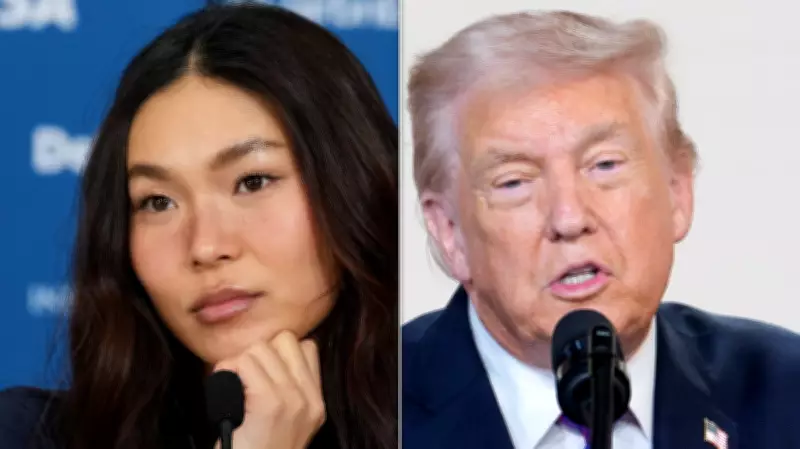
This comment prompted a strong reaction from Donald Trump, who took to his Truth Social platform to criticize Hess, calling him "a real Loser" and suggesting he would struggle to support him during the Games. The former president's comments have ignited a broader conversation about athletes' rights to express political opinions while representing their countries.
American Snowboarding Community Shows Support
Other members of the American snowboarding team have joined Kim and Gu in expressing support for diversity and freedom of expression. Snowboarder Bea Kim noted the current political divisions in the United States while emphasizing the strength that comes from diversity. "I think there are a lot of different opinions in the U.S. right now. Obviously we're very divided," she observed. "I personally am very proud to represent the United States. That being said, I think diversity is what makes us a very strong country and what makes that so special."
Teammate Maddie Mastro added her voice to the conversation, expressing sadness about events back home while reaffirming her commitment to representing American values. "It's really tough and I feel like we can't turn a blind eye to that. But at the same time, I represent a country that has the same values as mine of kindness and compassion. And we come together in times of injustice," Mastro stated.
Concerns About Olympic Spirit Overshadowed
Eileen Gu expressed particular disappointment that political controversy has threatened to overshadow the Olympic Games themselves. "I'm sorry that the headline that is eclipsing the Olympics has to be something so ... unrelated to the spirit of the Games," she lamented. "It really runs contrary to everything that the Olympics should be."

As athletes continue to prepare for competition in Livigno, this incident has highlighted the complex intersection of sports, politics, and personal expression in today's highly charged environment. The unified response from multiple Olympic athletes suggests a growing willingness among competitors to address social and political issues, even as they focus on athletic excellence during one of winter sports' premier events.