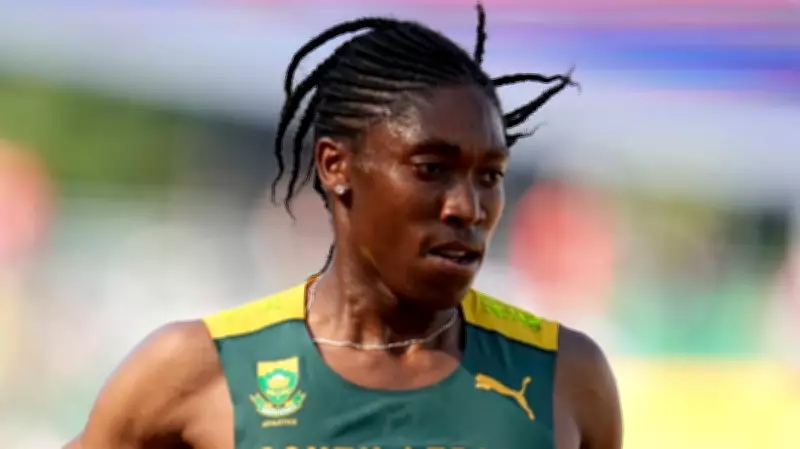
In a powerful statement from Cape Town, two-time Olympic champion runner Caster Semenya voiced her profound disappointment with International Olympic Committee President Kirsty Coventry regarding the recent decision to exclude transgender women athletes from competing in women's events at the Olympics. Semenya, a South African icon, expressed that she had expected more from a fellow African woman leader like Coventry, who hails from Zimbabwe.
Disappointment from an African Perspective
Semenya made her remarks during a press conference following a women's race in Cape Town, an event promoted to celebrate female strength, unity, and community support. She emphasized the unique challenges faced by African women and those from the global South, stating, "Personally, for her as a leader, she's an African, I'm sure she understands how, you know, we as Africans, we are coming from, as a global South, you know, you cannot control genetics." She added, "For me personally, for her being a woman coming from Africa, knowing how, you know, African women or women in the global South are affected by that."
IOC Decision and Its Implications
The International Olympic Committee's decision, published in a 10-page policy document last Thursday, not only bans transgender women athletes from women's events at the Olympics and other IOC events but also restricts female athletes like Semenya who have medical conditions known as differences in sex development (DSD). Semenya, who was assigned female at birth and has naturally higher testosterone levels than the typical female range, has been barred from running in her favorite 800-meter race at major international competitions since 2019 due to her refusal to take medication to reduce her hormone levels.

Challenging the Science and Consultation Process
Semenya questioned the scientific basis and consultation process behind the IOC's decision, asserting, "Obviously if you say the science, because we talk about science here, if the science is clear, show us who decided and don't dress that as a lie because it's a lie and we know because we've seen it." She criticized the approach as mere box-ticking, saying, "For me personally, I'll say the voice is not heard because you taking it as a tick box, you ticking a box so you can go clarify or say yes we've consulted. For me, it's you ticking the box."
Legal Battles and Broader Context
Semenya and other athletes, such as India's Dutee Chand, have previously challenged eligibility rules in court. Before the 2024 Paris Olympics, top-tier sports including track and field, swimming, and cycling excluded transgender women who had undergone male puberty. Semenya won a European Court of Human Rights judgment in her long legal challenge to track and field's rules, though it did not overturn them. Last year, she claimed to have ended her seven-year legal battle against sex eligibility rules despite that victory.
IOC's Stance and Future Impact
The IOC stated that the new policy, set to apply from the Los Angeles Olympics in July 2028, "protects fairness, safety and integrity in the female category." It remains unclear how many transgender women are competing at an Olympic level; no woman who transitioned from being born male competed at the 2024 Paris Summer Games, though weightlifter Laurel Hubbard participated in the Tokyo Olympics in 2021 without winning a medal. The IOC clarified that last week's decision is not retroactive and does not apply to grassroots or recreational sports programs, noting that the Olympic Charter affirms access to sport as a human right.