Every April 15, Major League Baseball honours a true pioneer. Players across the league wear the number 42, with no names on their jerseys, to commemorate Jackie Robinson's 1947 debut. That moment shattered baseball's colour barrier and began a transformative, though difficult, journey toward integration. The story in hockey, however, followed a markedly different and far slower trajectory.
The Jackie Robinson of Hockey? A Complicated Legacy
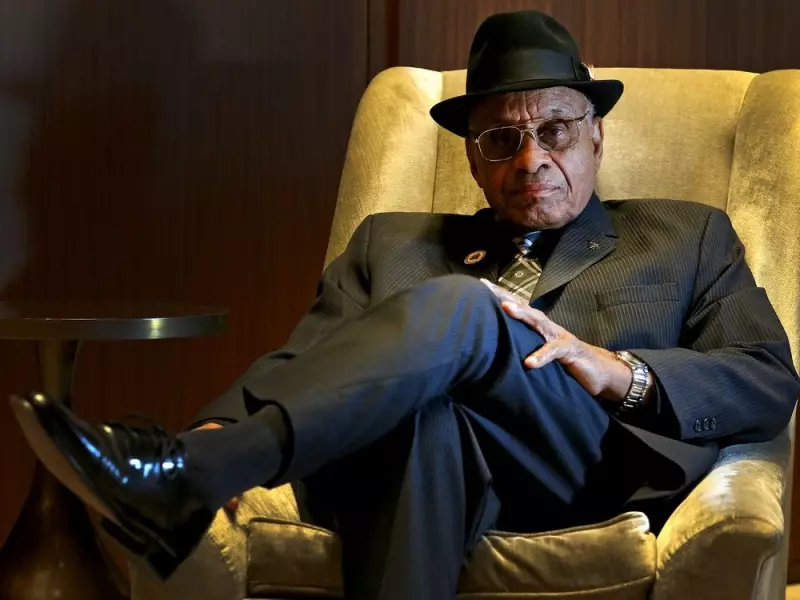
The NHL often refers to Willie O'Ree as the Jackie Robinson of hockey. The Fredericton native made history on January 18, 1958, when he skated for the Boston Bruins, becoming the first Black player in the league. Like Robinson, he faced vile racism: opponents targeting him for injury, fans hurling racial slurs and objects, and a notorious stick-swinging fight with Chicago's Eric Nesterenko that was sparked by racist taunts.
Yet, the comparison has its limits. Robinson enjoyed a Hall of Fame career spanning a decade, winning a World Series and becoming a six-time All-Star. O'Ree's NHL career lasted only 45 games over parts of two seasons. He was traded in 1961, suspecting the Bruins discovered he was blind in one eye, and never returned to the league despite excelling in the minors.

As author Steven Sandor notes in his book Leveling the Ice: Confronting Racism in Hockey, labelling O'Ree as the man who "broke" the barrier requires context. He was not the first player of colour with elite skill; players like Herb Carnegie and Larry Kwong were denied the opportunity. O'Ree was, as scholar Robin DiAngelo might reframe it, the first Black man the white ownership of the Bruins allowed into the NHL.
A Glacial Pace of Change: The Long Wait for Number Two
The starkest evidence of the NHL's sluggish progress lies in a simple question: Who was the second Black player in the league? Most fans cannot answer it. It took 13 years after O'Ree's debut for another Black man, Mike Marson, to reach the NHL with the Washington Capitals in 1974.
By contrast, in 1971—three years before Marson's debut—the Pittsburgh Pirates fielded an entire lineup of Black and Latino players. The gap highlights a profound disparity in the pace of integration between the two sports.
Marson's experience was harrowing. He faced daily racism on and off the ice: death threats from fans, racial slurs from opponents, and constant microaggressions. He was routinely stopped by arena security and airline staff who did not believe a Black man could be an NHL player. Former teammate Ron Lalonde observed that the relentless abuse forced Marson, a superb skater, to spend his energy fighting rather than refining his game.
Decades of Isolation for Pioneers
The trickle of Black players into the NHL was so slow that their arrivals can be listed in a stark sequence. Val James became the first American-born Black player in the NHL with the Buffalo Sabres in the 1981-82 season—more than two decades after O'Ree.
In his autobiography, Black Ice, a blurb from ESPN's John Saunders underscores the profound isolation: "My brother, Bernie, was the fifth Black player to reach the NHL, and we both know the challenges that come with being the lone face in not only the locker room, but the league."
Even after his playing days, O'Ree faced hostility as the NHL's Diversity Ambassador, receiving death threats in the mail. The league has since honoured him, retiring his No. 22 jersey in Boston in 2022 and naming its diversity award after him. These recognitions are meaningful, yet they also risk inflating a narrative of swift inclusion that does not match the historical record.
The legacy of Willie O'Ree is one of immense courage and a pivotal first step. However, the stories of Mike Marson, Val James, and the many years between them reveal a more complex truth: racism in the NHL did not end when O'Ree stepped onto the ice. It persisted for decades, challenging each pioneer who followed in his footsteps and shaping a league that is still grappling with its journey toward true equity and inclusion.