Auston Matthews' Olympic Moment of Truth Approaches
The puck rested on Auston Matthews' stick in a prime scoring position during overtime of last February's 4 Nations Face-Off championship game. With half the net open and a tournament victory within reach, the moment represented both opportunity and expectation for the Toronto Maple Leafs superstar. Instead, minutes later, his Maple Leafs linemate Mitch Marner found Connor McDavid open in the high slot, and the Canadian phenom scored the tournament winner.
What received less attention during Canada's celebration was Matthews' defensive responsibility for McDavid in that crucial overtime situation. He could have scored the winner or prevented the winning goal—a duality that has defined Matthews' big-game narrative throughout his decade with the Maple Leafs and his leadership role with Team USA.
Regular Season Dominance Versus Playoff Questions
Since entering the NHL in 2016, no player has scored more regular-season goals than Matthews' 427 tallies, even as his goal production has slowed slightly over the past two seasons. He achieved this milestone in fewer games than contemporaries like Connor McDavid (379 goals), Alex Ovechkin (394), or Leon Draisaitl (407). This regular-season excellence, however, contrasts sharply with his playoff performance.

In the postseason, Matthews ranks tied for 32nd with teammate William Nylander and others, including Colorado's Artturi Lehkonen—a player who averages 26 fewer regular-season goals per year than Matthews. More concerning for Team USA: in six Game 7 appearances and one clinching Game 5 with the Maple Leafs (the kind of high-pressure situations mirroring Olympic playoff games), Matthews has failed to score a single goal, with Toronto losing all seven contests.
Leading America's Greatest Hockey Generation
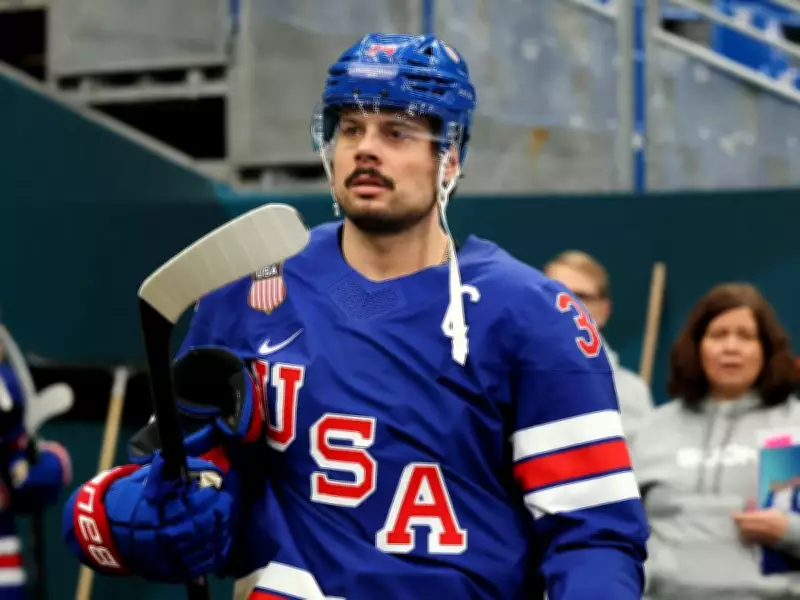
Now Matthews faces his most significant challenge yet as captain of Team USA at the Milano-Cortina 2026 Winter Olympics. This marks his first Olympic appearance alongside nearly every NHL star participating in the tournament, including McDavid, Nathan MacKinnon, and other Canadian standouts who are also making their Olympic debuts.
Coach Mike Sullivan has constructed what appears to be a formidable top line for Matthews, pairing him with high-scoring right winger Matt Boldy and proven playoff performer Jake Guentzel, who boasts 41 postseason goals in 74 career games. On paper, this combination looks exceptional, but Matthews must translate that potential into on-ice results when the pressure intensifies.
This American squad represents arguably the greatest collection of U.S. hockey talent ever assembled, featuring depth that includes three goaltenders considered superior to any Canadian netminder and defensive pairings that would outmatch most of Canada's blue line options. The roster strength allows for players like Buffalo's Tage Thompson to anchor the third line and the partially injured Jack Hughes to contribute from the fourth line.
The Leadership Comparison and Expectations
Matthews finds himself in elite captaincy company, alongside Sidney Crosby—who has won virtually every championship multiple times—leading Team Canada, and Gabriel Landeskog, the Stanley Cup champion captain of Team Sweden. Unlike these accomplished leaders, Matthews has yet to win any professional championships, placing additional scrutiny on his ability to guide this talented American team.
U.S. general manager Bill Guerin selected Matthews as captain despite having other natural leaders available, including Jack Eichel, the Tkachuk brothers, and Quinn Hughes. This decision represents a calculated gamble that Matthews' time has arrived on the international stage.
The Arizona-born forward's journey from unlikely hockey prospect to NHL superstar represents the kind of narrative Americans traditionally embrace during Olympic competition. For many casual American sports fans who typically ignore hockey, these Games will serve as their introduction to Matthews and his teammates, presenting an opportunity to capture the nation's attention beyond traditional hockey markets.

With every game broadcast nationally on NBC and the entire country tuning in for Olympic competition, Matthews faces questions that will define his legacy: Can he excel when it matters most? Can he become the difference-maker Team USA needs? Can he lead America to its first hockey gold medal since the Miracle on Ice in 1980?
As the Olympic hockey tournament begins, the excitement among players reaches unprecedented levels. For Auston Matthews, the moment represents both immense pressure and extraordinary opportunity—a chance to rewrite his big-game narrative and cement his place among hockey's elite leaders on the world's grandest sporting stage.