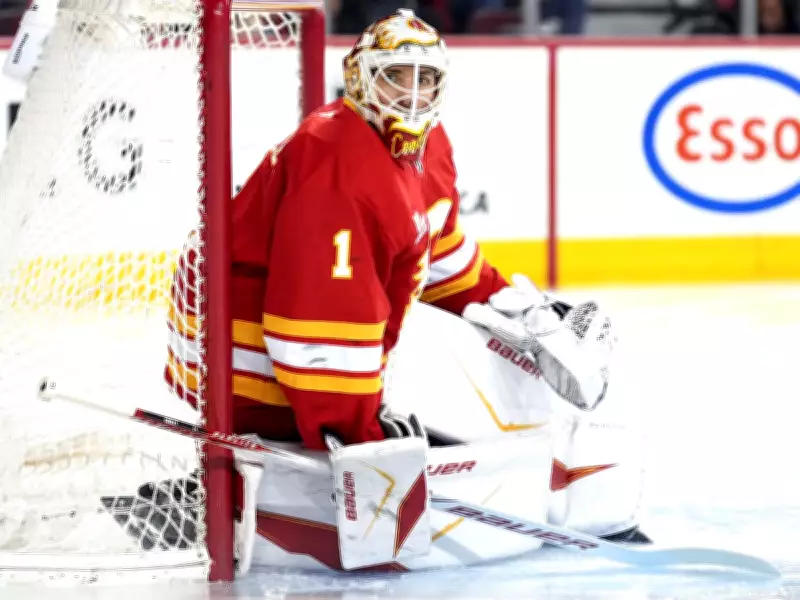
Flames' Devin Cooley Makes Case for Emotional Goalies in NHL
Calgary Flames goaltender Devin Cooley has sparked conversation across the hockey world by advocating for greater acceptance of emotional expression among NHL netminders. Following a recent victory over the Tampa Bay Lightning, Cooley's post-game comments went viral, challenging traditional expectations of stoicism in the crease.
Personal Philosophy on Emotional Display
"I think it's different for every single person," Cooley explained during a Wednesday media session. "If you're a guy who is going to show emotion and then it's going to carry over into the rest of the game, then yeah, you probably shouldn't show emotion. But if you're a guy who can get really angry, really quick, or really happy for five or ten seconds and then let it go, then I think it's a great strategy."
The 28-year-old goaltender emphasized that players shouldn't be judged uniformly for their emotional responses. "I don't think guys should be judged all the same," Cooley stated. "Some guys should not show emotion and some guys should."

Performance Backs Up Philosophy
Cooley's advocacy comes during his most productive NHL season to date. Having appeared in 26 games—far surpassing his previous career highs—the Flames netminder has posted impressive statistics including a 2.49 goals-against average and .915 save percentage. Both metrics place him among the league's top performers for goalies with at least 15 appearances this season.
"What does that matter when you're giving your team a chance to win?" Cooley questioned regarding criticism of emotional displays. His performance suggests that his approach isn't hindering his effectiveness between the pipes.
Historical Precedents in Hockey
Cooley pointed to NHL history to support his perspective, noting that emotional expression hasn't prevented goaltending excellence. "You see it all across the NHL, there's Hall of Famers who showed a tonne of emotions and slammed sticks and were crazy but were still amazing goalies," he explained. "Then, you have Hall of Fame goalies who never showed any emotion at all."
The Flames goaltender argued against simplistic judgments of emotional responses. "It's different for every person and I don't think anyone should be judged based off how they react to certain things," Cooley said. "It shouldn't be, 'Oh, this guy is mentally soft or he's out of control or he can't handle the stress,' because sometimes, for me, instead of internalizing it, if I can just yell or get it out for five or ten seconds, then it makes everything better and I can let it go and reset."
Beyond the Hockey Arena
Cooley's philosophy extends beyond the rink to his personal life. When dealing with stress in everyday situations, the goaltender employs similar emotional release techniques. "I like a lot of dubstep, like heavy metal mixed with dubstep," he revealed. "My girlfriend hates it, but if we're in the car and running late I'll just blast it and it makes me laugh and it makes me smile and it helps make moving on from things really easy."
While acknowledging his approach might not work for everyone, Cooley maintains that emotional expression serves as a valuable reset mechanism in high-pressure situations. His viral comments have ignited discussion about psychological approaches in professional sports and whether traditional expectations of emotional control need reevaluation in modern hockey.