Legendary NHL Defenseman Chris Chelios Criticizes Edmonton Oilers' Defensive Play
Hall of Fame NHL defenseman Chris Chelios has identified the Edmonton Oilers' primary obstacle to playoff success, asserting that the team's issues lie not in goaltending but in their defensive approach and overall style of play. In a recent interview with writer Jonathan Spencer of the Ontario gambling site ComeOn!, Chelios emphasized that until the Oilers commit to stronger team defense, they will continue to struggle in critical postseason moments.
The Core Problem: Defensive Deficiencies
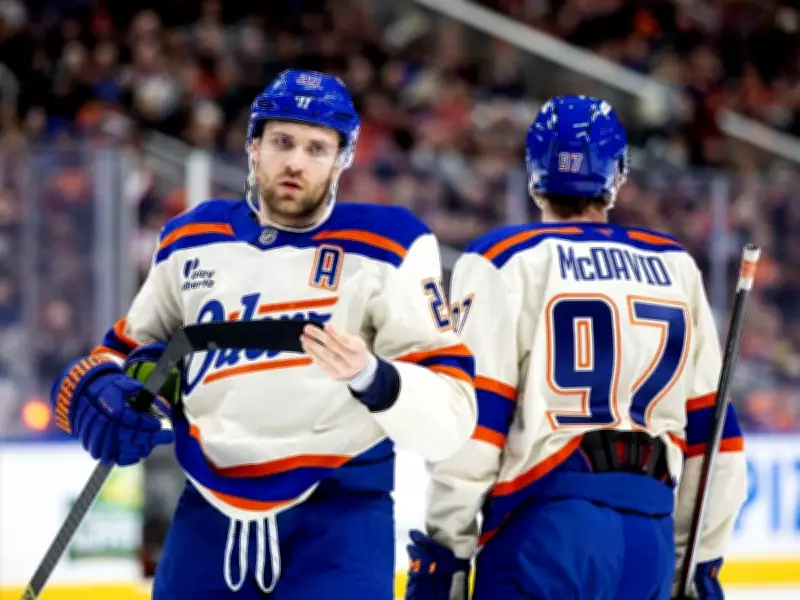
Chelios directly challenged the common narrative that Edmonton lacks an elite goaltender, stating, "Everybody says that's what seems to be the issue but it's not. It's their style of play. It's their defence. They don't play well defensively. They don't give their goalies a chance sometimes with outnumbered situations." He pointed out that star players Connor McDavid and Leon Draisaitl, along with the entire team, are guilty of defensive lapses that compromise their playoff potential.
The three-time Stanley Cup champion stressed that playoff hockey demands rigorous team defense, as goals become scarce. "You have got to play team defense in the play-offs. Goals are hard to come by. Maybe not for those two guys when you're McDavid and Draisaitl, but you've still got to defend," Chelios explained. He concluded that defensive commitment is non-negotiable for championship aspirations.

McDavid's Improvement and Ongoing Challenges
Chelios acknowledged McDavid's conscious effort to enhance his defensive game during last season's playoffs, noting, "I think McDavid made a conscious effort last year. He was way better in the playoffs playing defensively." However, he highlighted the delicate balance offensive stars must strike, adding, "But then there's that fine line. How much do you have to sacrifice to play defence to get your transition game going and create some offence? He'll figure it out. He's such a talent."
This assessment aligns with observations from Oilers analysts, who have consistently criticized the team's defensive intensity and execution. Issues such as puck-watching, risk-taking, poor reads, and players being out of position have plagued Edmonton, undermining their playoff performances.
Defensive Performance Across the Roster
Chelios's critique extends beyond the star players, implicating the entire defensive corps. Among Edmonton's top players, only defenseman Mattias Ekholm has consistently demonstrated defensive excellence. McDavid and Evan Bouchard have shown flashes of strong defense but struggled in the Stanley Cup Final against the Florida Panthers. Draisaitl has improved this season but requires better execution and positional play within the Oilers' zone system.
Defenseman Darnell Nurse has occasionally reached high defensive levels but has consistently allowed dangerous scoring chances and goals against in the playoffs over the past four years. Chelios suggested that pairing with a solid positional defender like Murphy might help, but Nurse must avoid being caught up ice, as seen in a critical goal scored by Vegas.
Bottom Pairing Struggles and Recent Trends
The Oilers' bottom defensive pairing of Jake Walman and Spencer Stastney has faced significant challenges, frequently leaking dangerous shots against. Walman showed improvement when paired with Ty Emberson, but both had a difficult night against Utah, highlighting ongoing inconsistencies.
Despite these issues, there has been some recent improvement in Edmonton's defensive metrics. Over the last eight games, the team has allowed 6.75 five-alarm shots per game—a category of the most dangerous scoring chances with a conversion rate over 30%. This represents progress from February and March, when the Oilers gave up 8.5 five-alarm shots per game over a 20-game span, a period Chelios described as "atrocious."
For context, during Edmonton's best 10-game stretch in December, they allowed only 5.0 five-alarm shots per game, demonstrating the level of defensive performance required for sustained success. Chelios's analysis underscores that limiting these high-danger opportunities is critical for the Oilers to translate regular-season prowess into playoff victories.