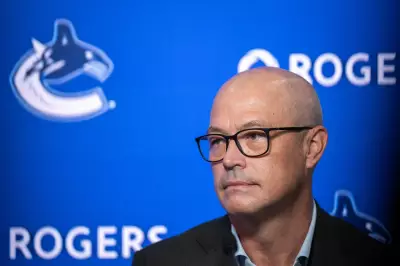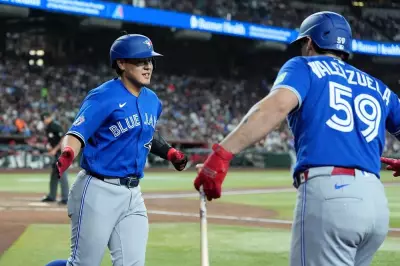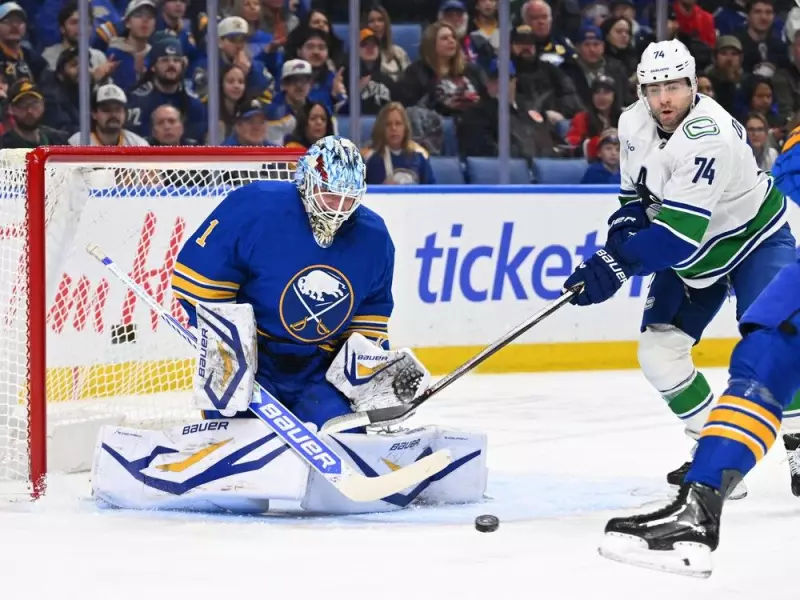
The Vancouver Canucks are at a critical juncture, with the NHL trade deadline fast approaching and a roster in need of a significant overhaul. While fans speculate wildly, the reality of who is genuinely available and what the team's strategy should be is coming into sharper focus. At the heart of the conversation is a player who has publicly declared his commitment to turning things around in Vancouver.
Jake DeBrusk: A Contradiction of Commitment and Value
Jake DeBrusk's name surfacing in trade rumours this week created an interesting paradox. Just last week, the winger expressed profound frustration with the team's losing ways and a deep desire to be part of the solution. "Oh no. I'm here to stay. To fix this," DeBrusk told reporters when asked about a potential move.
Despite the Canucks' struggles, DeBrusk's individual performance, particularly on the power play, makes him an attractive target for contending teams. He has scored 12 goals this season, with 11 coming with the man advantage, cementing his reputation as one of the league's premier finishers in that situation. His experience is also notable; he was a key contributor for the Boston Bruins during their 2019 Stanley Cup Final run, a season where he potted 27 regular-season goals.

The central question for Canucks management is strategic: if the goal is a genuine rebuild focused on acquiring youth, does holding onto a 29-year-old winger align with that vision? His clear passion for the city and team complicates what would otherwise be a straightforward decision to sell high on a valuable asset.
The Likely Departures and Complicated Cases
Beyond DeBrusk, several other Canucks players are living with the uncertainty of the trade deadline.
Kiefer Sherwood appears to be the most certain trade candidate. Industry insiders suggest a deal is inevitable, with the Canucks patiently waiting for the market to heat up as the deadline nears to maximize his return. The team's apparent strategy is to instigate a bidding war, hoping to secure more than what has been offered so far. "Things are heating up," a source close to the situation revealed.
The case of Evander Kane has become more complex. Reports indicate the Canucks recently inquired with the Edmonton Oilers about a potential return, only to be rebuffed. This response suggests that moving the veteran winger, whom Vancouver initially believed would have a market, may be more challenging than anticipated. The acquisition, seen as a low-risk, potential high-reward move, now carries the risk of becoming a sunk cost.
In contrast, Tyler Myers is almost certainly staying put. The towering defenseman holds a full no-move clause, is settled with his family in Vancouver, and the organization values the veteran stability he provides, even in a rebuilding phase. His experience in Adam Foote's man-on-man system has had ups and downs, but his long NHL career is no accident.
Depth Pieces and The Big Question
As contenders look to bolster their bottom-six for a playoff run, Canucks depth forwards could draw interest. Both Teddy Blueger and David Kampf are set to play in the upcoming Olympics, highlighting their defensive reliability. Blueger, in particular, has a Stanley Cup pedigree from his time with the Vegas Golden Knights in 2023, though his playoff role was limited. Kampf offers similar defensive acumen but with even less offensive upside. Their value is likely to be modest, but they represent the type of role player often moved at the deadline.
Then there is the elephant in the room: Elias Pettersson. The possibility of trading the team's number-one centre is not being dismissed outright. Reports confirm other teams, including the Carolina Hurricanes, have made inquiries. While his offensive production has dipped, Pettersson remains an elite defensive forward. A trade involving him would signal a dramatic and aggressive shift in the rebuild, potentially moving on from the core of the previous era entirely. Teams like the Chicago Blackhawks or San Jose Sharks, with young superstar centres already in place, could see him as a perfect second-line complement.

The current situation forces a reflection on what might have been if the previous core, featuring Pettersson, J.T. Miller, and Bo Horvat, had been managed differently. The path forward is undeniably difficult. The duration of this struggle hinges on one critical factor: does the current Canucks ownership and management possess the fortitude to execute a truly aggressive, no-holds-barred rebuild? The decisions made in the coming weeks will provide the answer.