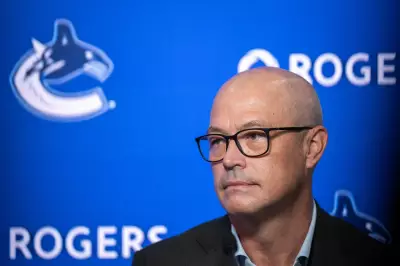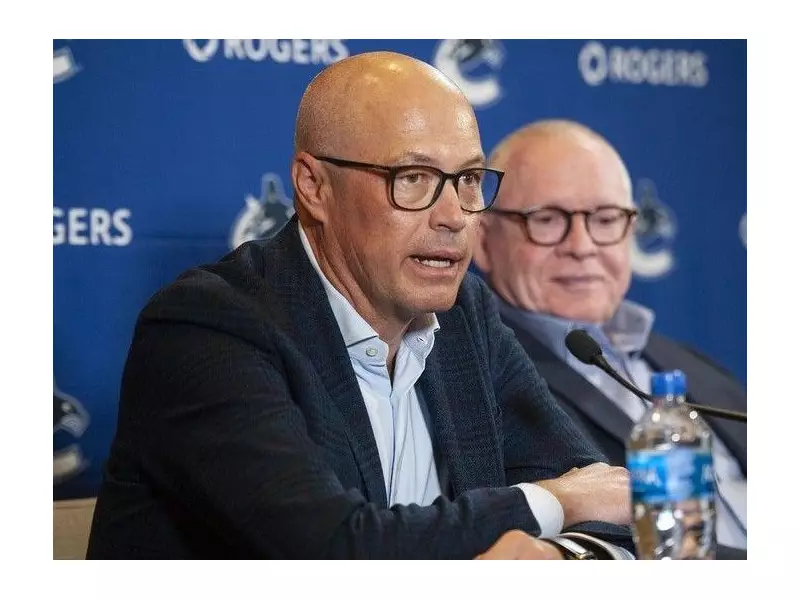
Vancouver Canucks general manager Patrik Allvin has introduced a new direction for the franchise, calling it a "hybrid form" of retooling. This strategy emerges in the wake of the blockbuster trade that sent star defenceman Quinn Hughes to the Minnesota Wild, a move that brought a significant return of young talent to the West Coast.
The Foundation of the Hybrid Model
Speaking to an intermission panel on Amazon Prime, Allvin pointed to the acquisition of defenceman Zeev Buium (20), centre Marco Rossi (24), and winger Liam Ohgren (21) as the cornerstone of this new approach. "We felt the package that Minnesota delivered with the younger players gives us a chance to step back here and retool it a little bit with a hybrid form," Allvin stated.
He praised the current team's resilience, noting improved energy and a faster pace of play. The core objective is clear: make the roster younger while attempting to remain competitive. However, this dual mandate creates inherent tension between long-term development and short-term results.

The Daunting Playoff Mathematics
Despite a recent successful road trip where the Canucks won four of five games, the path to the postseason remains extraordinarily difficult. As of December 23, 2025, the team sat six points out of the final Western Conference wild-card spot, albeit with two games in hand on some rivals.
The numbers tell a stark story. To hit the projected playoff target of 96 points, Vancouver would need an exceptional record of 30-13-3 over its final 46 games, amassing 63 more points to add to its current total of 33. Furthermore, they must overtake seven other teams in the standings, a task requiring consistent excellence and considerable help from those above them.
Offensive struggles are a primary concern. The team ranks 26th in the NHL in average goals per game (2.78) and 22nd in face-off percentage (48.6%). Even a middling power play (16th at 20.2%) has gone cold, scoring just 5 times in its last 39 opportunities over a 12-game span.
Key Players at a Crossroads
The "hybrid" strategy faces immediate tests with several veteran players. Winger Kiefer Sherwood, 30, leads the team with 16 goals and is second in the entire league with 164 hits. As an impending unrestricted free agent on an expiring $1.5 million contract, he is a prime trade-deadline asset. Comparable players suggest he could command a first-round pick, a return that would lean more toward a rebuild than a retool.
Similarly, Evander Kane, 34, is gaining trade interest after a slow start to the season. He has recorded 9 points (3 goals, 6 assists) in his last 15 games. His proven playoff performance—12 points in 21 games last spring—makes him an attractive rental for contenders, potentially fetching a second-round pick.
The Canucks must decide whether to trade these valuable assets for future capital or retain them in a likely futile push for the playoffs. Holding them risks losing them for nothing in free agency, but trading them signals a clearer commitment to the future.
The Goaltending Lifeline and Offensive Woes
The recent road success was built almost entirely on the backs of goaltenders Thatcher Demko and Kevin Lankinen. The duo spectacularly covered for a team that was outshot 155-109 during the five-game trip. This reliance on stellar netminding is unsustainable for a prolonged playoff push.
Offensive stars have also hit dry spells. Brock Boeser has one goal in his last 18 games, while Jake DeBrusk has just one in his last 15. The hoped-for return of injured centre Elias Pettersson could provide a boost, but the scoring woes are deep-rooted and systemic.
Patrik Allvin's "hybrid" plan for the Vancouver Canucks is a bold attempt to bridge the present and the future. It acknowledges the need for a youth infusion while appeasing an ownership and fanbase hungry for relevance. However, the stark reality of the standings, the offensive deficiencies, and the looming decisions on key veterans like Sherwood and Kane will soon force the organization's hand. The coming weeks will reveal whether this hybrid model is a sustainable strategy or merely a transitional phase toward a more definitive rebuild.