Reassessing the 2026 Olympic Hockey Final: A Game Lacking Historic Grandeur
The stage in Milan was set for an epic confrontation. With geopolitical tensions simmering between Canada and the United States, the men's hockey gold medal match at the 2026 Winter Olympics carried weighty expectations. Yet, despite the dramatic backdrop, the contest failed to deliver the legendary status some broadcasters prematurely bestowed upon it.
A Match That Failed to Ignite
The much-anticipated showdown between North American rivals culminated in a 2-1 overtime victory for the United States over Canada. While tense and nerve-racking, the game lacked the explosive quality that defines truly historic hockey moments. The pervasive NHL atmosphere throughout the tournament contributed to a feeling that this was merely another high-stakes professional game rather than an Olympic classic for the ages.
Contrary to enthusiastic declarations from some commentators, this was not the greatest hockey game ever played. That distinction still belongs to September 28, 1972, when Canada mounted a miraculous comeback against the Soviet Union in Moscow, scoring three third-period goals to secure a 6-5 victory on Paul Henderson's iconic marker with just 34 seconds remaining.

Historical Context and Comparisons
The 1987 Canada Cup final presents another superior candidate for hockey's pinnacle moment. That best-of-three series featured three consecutive 6-5 thrillers, with Canada clinching the championship on Mario Lemieux's dramatic goal assisted by Wayne Gretzky with barely a minute remaining. Even the legendary 1975 New Year's Eve clash between the Soviet Red Army and the Montreal Canadiens, which ended in a 3-3 tie, generated more electricity than Sunday's Olympic final.
"The greatest collection of talent on the ice? Not that either," the analysis contends, pointing to superior rosters from hockey's golden eras.
Game Analysis and Missed Opportunities
The Milan contest produced only three total goals despite numerous scoring chances. Canadian players including Devon Toews and Nathan MacKinnon will lament missed opportunities that could have altered the outcome. While both goaltenders—Connor Hellebuyck for the United States and Jordan Binnington for Canada—delivered exceptional performances, the game's flow suffered from excessive physicality and defensive schemes characteristic of modern NHL playoff hockey.
Notable absences impacted the contest. Sidney Crosby's unavailable status likely diminished Canada's offensive capabilities, while Montreal Canadiens captain Nick Suzuki saw limited ice time, restricted to just eight shifts with no overtime action.
Bright Spots and Future Considerations
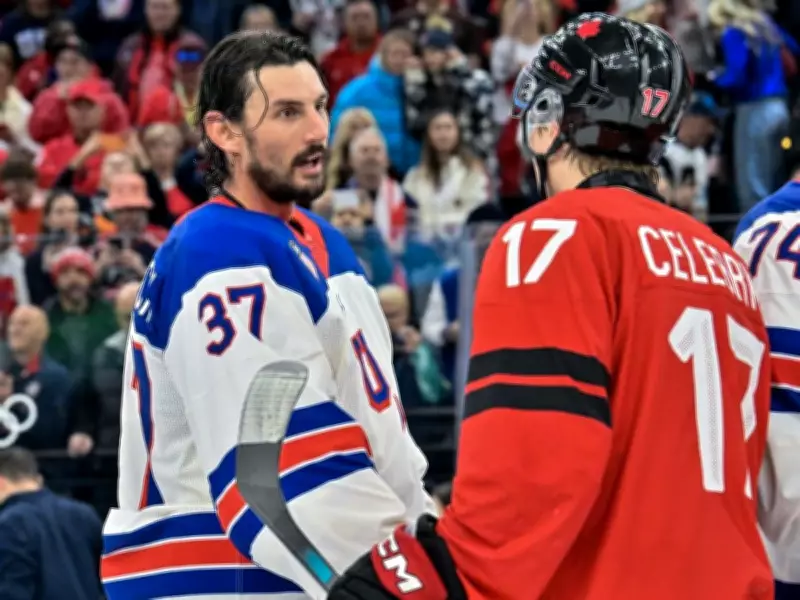
Despite the disappointing result, several Canadian players showcased their talents throughout the tournament. Young phenom Macklin Celebrini demonstrated remarkable skill through the preliminary rounds, though his inexperience showed in the final games as he repeatedly fired shots directly into Hellebuyck's positioning rather than employing deceptive moves.
The tournament provided valuable experience for numerous NHL players, including Canadiens teammates Juraj Slafkovsky and Oliver Kapanen, who embraced on the ice after Finland's bronze-medal victory. Kapanen particularly impressed when inserted into the lineup, revealing why he ranks among the league's most underrated rookies.
Broader Implications and Looking Ahead
The political subtext surrounding the game—with American players openly supporting former President Donald Trump and ongoing trade tensions between the nations—failed to translate into on-ice drama once the puck dropped. American stars including Jack Eichel and the Tkachuk brothers made minimal impact against Canada's defensive structure.
Looking toward future international competitions, Canada must address its declining production of elite goaltenders. While the nation continues developing exceptional skaters, securing world-class netminding before the 2030 Olympics should become a priority for Hockey Canada.
Ultimately, while the 2026 Olympic final provided tense moments and quality hockey, it falls short of the historic standard set by true classics of the sport. The search for hockey's greatest game continues elsewhere in the annals of international competition.