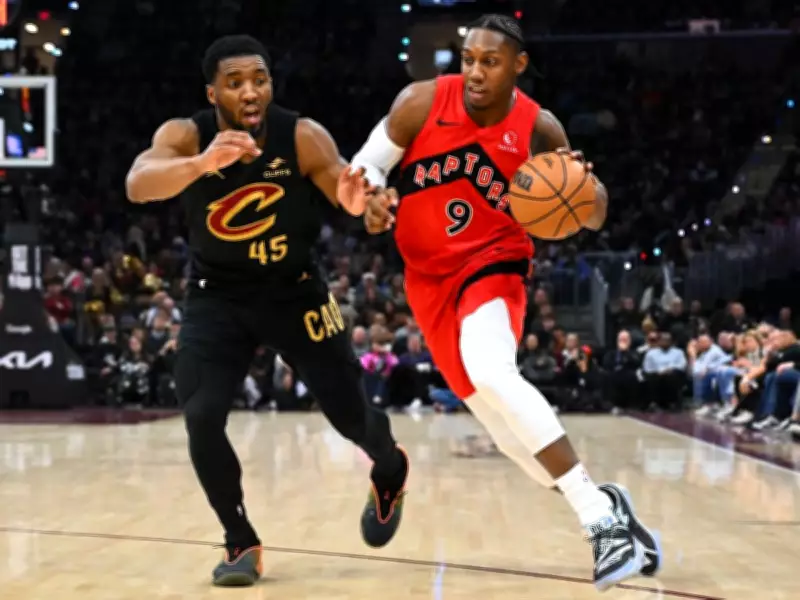
The Toronto Raptors put up a strong fight in their first playoff appearance in years, ultimately falling in seven games to the Cleveland Cavaliers. However, they were not far from advancing to face the Detroit Pistons. With Detroit struggling in its own seven-game loss to Cleveland, Toronto might have progressed further, but that remains speculative.
What the Raptors can learn from the NBA playoffs
The Raptors will analyze the playoffs for lessons. Here are key takeaways.
Ball movement does not guarantee success
Toronto posted the fifth-best offensive rating in the playoffs, despite missing key scorers Brandon Ingram and Immanuel Quickley. The team generated many free throws and hit a higher percentage of three-pointers than in the regular season. The Raptors assisted on a high rate of baskets, ranking second in assist percentage among playoff teams. However, all five teams with the highest assist percentage are eliminated, and only two of the best assist-to-turnover teams remain. San Antonio and Cleveland, both in the bottom six for assist percentage, reached the conference finals. The Cavaliers had the worst assist-to-turnover ratio among remaining teams. Dynamic one-on-one scorers remain crucial in high-pressure situations. Ingram is the closest the Raptors have to that, but he is not in the same class as elite creators. Toronto needs a guard who can drive to the basket and hit pull-up three-pointers consistently.

Home court is not everything
Home-court advantage has diminished. This season, only 59% of home teams won through Thursday, continuing a trend from last year when road teams won 48% of games, the highest since 1981. The Indiana Pacers went 7-5 on the road in last year's playoffs. This year, the Thunder started 4-0 on the road, New York began 4-1, and San Antonio went 5-2. Only Cleveland relied heavily on home court, with a 2-7 road record. The Thunder and Spurs were dominant on the road in the regular season, combining for a 60-22 record. Toronto used a similar formula, at one point having a better away record than at home before winning several games at Scotiabank Arena to close the season.
Size still matters
Toronto's roster is small, with Jakob Poeltl as the only player taller than 6-foot-9. This is problematic even though the game has become smaller, especially since Scottie Barnes and Collin Murray-Boyles are elite defenders. Only four teams allowed a higher opponent effective field goal percentage than the Raptors, partly because Cleveland overwhelmed them with size. Only five teams allowed a higher free-throw rate, indicating a lack of rim protection. Toronto surrendered a 35.9% opponent offensive rebounding rate, the worst among playoff teams. Cleveland, with the third-worst rate, survived, but the Raptors nearly beat them by dominating the offensive glass. Conversely, New York and San Antonio excel at keeping opponents off the offensive boards and limiting points in the paint. If Toronto can improve Poeltl's interior defense or acquire a young, athletic 7-footer who can rebound and defend, they will be better prepared for future playoff runs.