The Vanishing Act: Doubles and Triples in Modern MLB
In the ever-evolving landscape of Major League Baseball, a subtle yet significant trend is reshaping the game: the steady decline of doubles and triples. Once staples of offensive production, these extra-base hits are becoming increasingly rare, a phenomenon attributed to two key factors: the enhanced skills of outfielders and the dominance of power hitters.
The Defensive Revolution in the Outfield
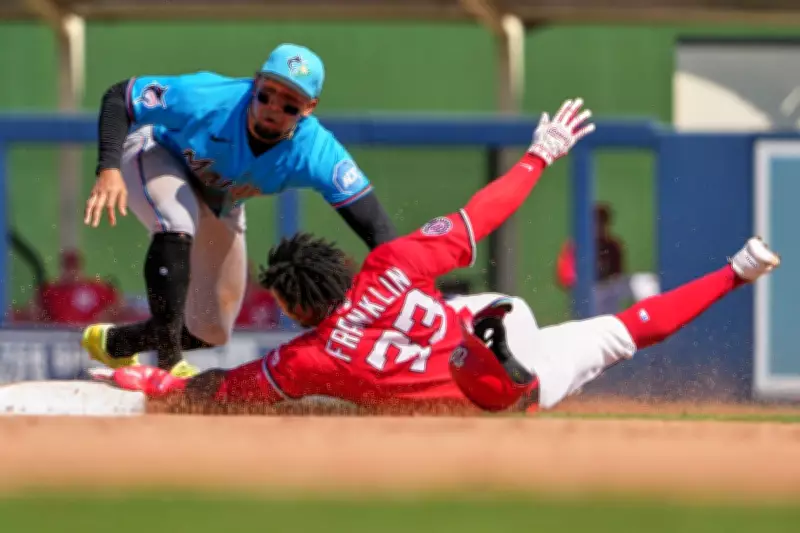
Modern outfielders are no longer just strong arms patrolling the grass; they are athletic marvels equipped with advanced training, data analytics, and superior positioning. Teams now prioritize speed, range, and defensive IQ, turning potential gaps into outs. The days of outfielders misplaying balls or taking poor routes are dwindling, as exemplified by plays like the Washington Nationals' Christian Franklin being tagged out by Miami Marlins shortstop Maximo Acosta after trying to stretch a single into a double during spring training. This defensive prowess directly reduces the number of balls that drop for extra bases, stifling traditional hitting approaches.
The Rise of the Slugger Mentality
Concurrently, the offensive mindset has shifted dramatically. With an emphasis on launch angles and exit velocity, hitters are increasingly focused on hitting home runs rather than spraying line drives into the gaps. This "all-or-nothing" approach, while boosting home run totals, often comes at the expense of doubles and triples. Batters are less inclined to settle for a double when they can swing for the fences, leading to more strikeouts and flyouts but fewer balls that find the alleys. This trend is reinforced by analytics that value the higher run expectancy of home runs over other hits.

Implications for the Game's Future
The decline in doubles and triples is not merely a statistical curiosity; it reflects a broader transformation in baseball strategy. Teams are building rosters around power and defense, moving away from small-ball tactics like hit-and-runs or stealing bases to manufacture runs. This shift could alter how games are played and managed, potentially making the sport more predictable but less dynamic in terms of base-running excitement. As the game continues to evolve, fans and analysts alike will watch to see if this trend persists or if a counter-movement emerges to revive the art of the extra-base hit.
In summary, the dwindling numbers of doubles and triples in MLB are a direct result of better outfield defense and the prioritization of power hitting. This change underscores how advancements in player development and strategic analytics are continuously redefining America's pastime, challenging hitters to adapt in an era where every inch of the field is fiercely contested.