The provincial government's proposed changes to Alberta Income for the Severely Handicapped (AISH) bring a sense of deja vu. In 1999, dramatic changes to AISH were being planned. Existing recipients would remain on the current program, while new applicants would be placed on Open Doors, with lower benefits, asset limits and stricter rules.
People with disabilities soon understood that this was not simply program modernization. It was cutting income support and pushing people with disabilities deeper into poverty. Those on AISH feared they would be removed from the program and that their modest savings could disqualify them from support.
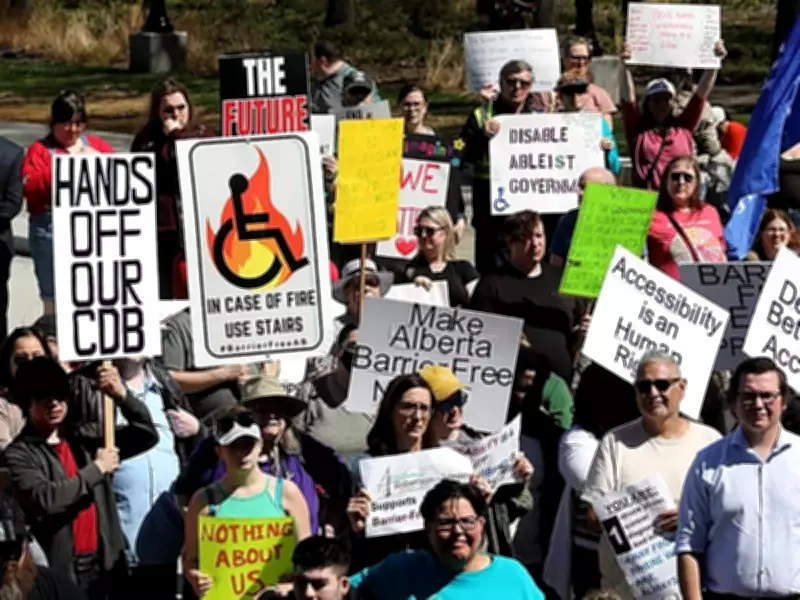
The disability community responded. Organizations of people with physical, intellectual and mental-health disabilities joined with families, churches and community organizations to ensure the government understood the consequences of the proposed policies.

As executive director of the Alberta Committee of Citizens with Disabilities (now Voice of Albertans with Disabilities), I worked with others to launch a campaign called Stop and Start Over. We organized public meetings to raise our concerns with the proposed new program.
After weeks of mounting pressure, the province listened to the disability community and abandoned its plan.
AISH survived intact, and a generation of Albertans with disabilities had the stability of an assured income. AISH was created as an income replacement supplement, not an act of charity or a temporary welfare program. It provided stability and dignity for those who do not fit into the expectations of the labour market.
The difference AISH made to thousands of Albertans with disabilities is immeasurable. Many were kept out of homelessness, sickness through lack of uninsured medications, and hunger.
The Alberta Disability Assistance Program (ADAP) is now being framed as innovation. Many of the ideas being discussed, including stricter rules, stronger employment expectations and restructuring disability supports, echo policy debates from a generation ago.
In 1999, Albertans refused to be sidelined while decisions were made behind closed doors. Communities stood together demanding that the government see the human consequences of its policies. Those consequences are no less real today.
Any policy that weakens income security risks pushing tens of thousands deeper into poverty, increasing homelessness, and downloading costs onto emergency health and social services. These are predictable outcomes.
The AISH benefit for a single person with a disability is only $1,940 per month ($23,280 per year), far below the Market Basket Measure poverty line in 2024 of approximately $28,954 annually for Calgary and slightly lower for Edmonton. That amount must cover rent, food, transportation, clothing, and additional medical and other expenses. One can only imagine how impossible it is to live on this amount, given the even higher cost of living in 2026.