Overwhelming Majority of Canadians Condemn Alberta Separatists' Foreign Outreach as Treasonous
A significant new national poll reveals that most Canadians view recent efforts by Alberta separatists to seek foreign assistance in breaking up the country as fundamentally treasonous. The survey from Canada Pulse Insights comes amid revelations that leaders of the Alberta Prosperity Project have engaged in multiple meetings with U.S. government officials in Washington since last spring.
Strong National Consensus Against Foreign Interference
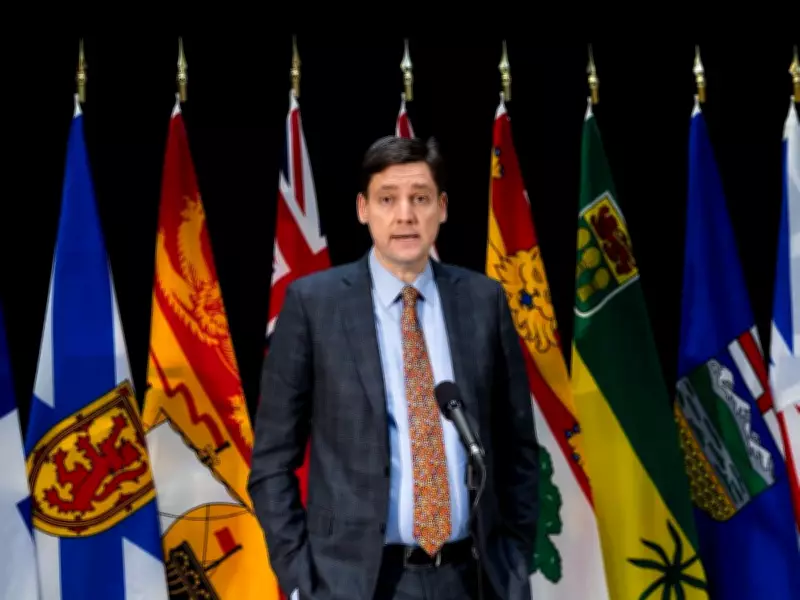
The poll found that seventy-one percent of Canadians agree with British Columbia Premier David Eby's recent statement that "to go to a foreign country and to ask for assistance in breaking up Canada, there's an old-fashioned word for that, and that word is treason." This sentiment reflects a deep-seated national consensus against what many perceive as crossing a fundamental red line in Canadian sovereignty.
"My sense was overall Canadians treat appeals to foreign governments for help in breaking up the country as beyond the pale. It's effectively a red line that most are prepared to call treason," said Canada Pulse Insights CEO John Wright in a recent interview about the survey findings.

Regional Variations in Sentiment
The poll revealed interesting regional variations in how Canadians view the Alberta separatists' actions:
- Saskatchewan and Manitoba residents showed the strongest agreement with Eby's treason characterization at 82%
- Atlantic Canada followed closely at 78% agreement
- Ontario residents registered 77% agreement
- British Columbia showed 75% agreement
- Quebec registered 63% agreement
- Alberta showed the lowest agreement at 56%, though still representing a majority
Nationally, 29% of those polled disagreed with Eby's treason comment, with Albertans showing the highest disagreement at 44%.
Demographic Breakdown of Opinions
The survey also uncovered significant demographic patterns in how Canadians perceive the separatists' foreign outreach:
- Age differences: Canadians aged 65 and up were most likely to agree with Eby's treason comment at 79%, while those between 35 and 54 were most likely to disagree at 36%
- Income patterns: People earning less than $99,000 annually showed 74% agreement, while those earning more than $100,000 a year showed 35% disagreement
- Gender variations: Women were more likely to agree with the characterization of the actions as treasonous compared to men
Broader Context of the Alberta Prosperity Project's Actions
The poll comes in response to revelations that leaders of the Alberta Prosperity Project have met with U.S. government officials three times in Washington since last spring. The separatist group, which advocates for Alberta's independence, has stated they are attempting to secure a US$500 billion line of credit from foreign sources.
Interestingly, poll respondents were informed ahead of time that none of the Alberta Prosperity Project's activities technically meet the legal definition of treason or sedition under Canada's Criminal Code. Despite this clarification, the overwhelming majority of Canadians still characterized the actions as treasonous in spirit.
Stronger Consensus on Inappropriateness of Foreign Assistance
The survey found an even stronger consensus when asking about the appropriateness of seeking foreign assistance to weaken Canada. Eighty-one percent of Canadians agreed with Eby's statement that "it is completely inappropriate to seek to weaken Canada, to go and ask for assistance to break up this country from a foreign power."
Regional agreement with this broader statement showed:
- British Columbia: 86% agreement (highest among provinces)
- Ontario and Atlantic Canada: 83% agreement each
- Saskatchewan and Manitoba: 82% agreement
- Quebec: 78% agreement
- Alberta: 69% agreement
Only 19% of Canadians disagreed with this broader statement about the inappropriateness of seeking foreign assistance to break up the country.

Implications for National Unity and Political Discourse
The poll results suggest that despite regional differences and political debates about federal-provincial relations, most Canadians draw a firm line at seeking foreign assistance to dismantle the country. The findings come at a time when discussions about national unity and provincial autonomy continue to shape Canadian political discourse.
The strong consensus across most demographic groups indicates that appeals to foreign governments for assistance in breaking up Canada represent what many Canadians consider a fundamental violation of national loyalty and sovereignty, regardless of the legal technicalities involved.