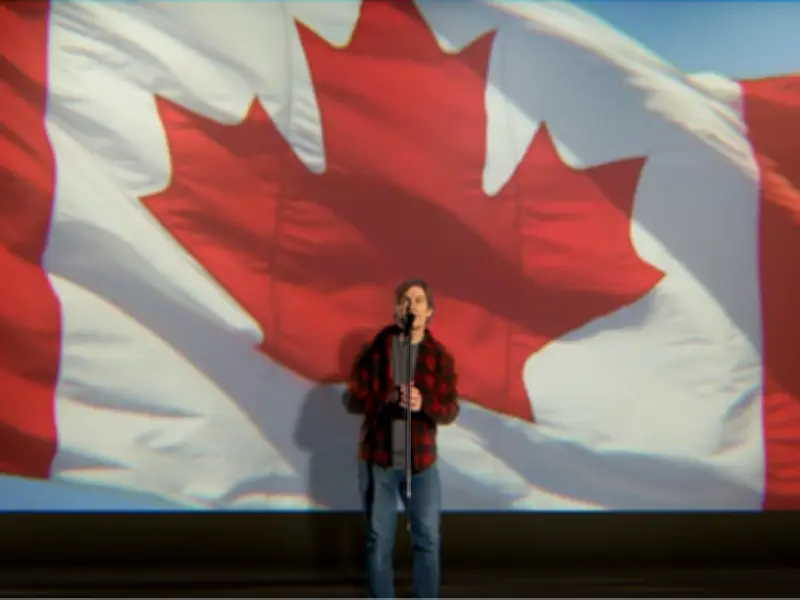
A recent Leger-Postmedia poll has quantified a sentiment many Canadians have long felt: 66 per cent of Canadians view Americans as arrogant. This finding, released amid renewed tensions over U.S. President Donald Trump's threats to Canadian sovereignty and trade disputes, underscores a deep-seated ambivalence in Canadian attitudes toward their southern neighbour.
The Joe Canadian Phenomenon
Two decades ago, a Molson Canadian beer commercial captured the Canadian psyche. The 60-second spot, known as "The Rant," featured actor Jeff Douglas as Joe, an average Canadian in a flannel shirt. It celebrated bilingualism, diversity, peacekeeping, hockey, and the beaver, ending with the tagline "I am Canadian!" The ad also drew a sharp line between Canadian and American identity, insisting that "a tuque is a hat, a chesterfield is a couch, and it is pronounced zed — not zee — zed!"
According to Asa McKercher, a Canada-U.S. relations specialist at St. Francis Xavier University, "That beer ad spoke to a lot of myths, grounded in some truths." The commercial was wildly popular and boosted beer sales, reflecting a nation eager to define itself apart from its powerful neighbour.

Polling Data Reveals Persistent Divide
The new poll, conducted by Leger for Postmedia, shows that 51 per cent of Canadians believe the two countries are not very or not at all similar. Sixty-four per cent think Canadians are nicer than Americans, and 54 per cent consider Canadians more cultured. These numbers suggest a enduring perception of difference, even as the two nations share the world's longest undefended border and extensive trade ties.
Madelaine Drohan, author of the recent book He Did Not Conquer about Benjamin Franklin's failed attempts to annex Canada, argues that the narrative of close friendship is misleading. "What gets in the way is this idea that we're friends," she said. Drohan points to a long history of Canadian resentment, including the difficulty of "living in their shadow."
Historical Roots of Anti-Americanism
The poll's findings echo past moments of Canadian nationalism. In 2003, then-Prime Minister Jean Chrétien refused to join the U.S.-led invasion of Iraq, a decision that boosted his popularity and gave Canadians a clear sense of moral distinction. The Leger-Postmedia poll shows that Liberal support currently hovers around 50 per cent, a level not seen since Chrétien's era, despite economic sluggishness and rising inflation.
Former Prime Minister Justin Trudeau was criticized for defining Canada in opposition to the U.S., but the poll suggests many Canadians agree. "One of the ways we define ourselves most easily is, well, we're not American," Trudeau said last year.
Current Tensions Fuel Sentiment
The poll was conducted against a backdrop of renewed friction. President Trump has recently threatened Canadian sovereignty, blocked the opening of a new cross-border bridge paid for by Canada, and refused to renew a free-trade deal he originally signed. These actions have revived anti-American sentiment, with 66 per cent of Canadians now calling Americans arrogant.
Analysts caution that while anti-Americanism is a recurring theme in Canadian politics, it is often situational. McKercher notes that the Joe Canadian ad resonated because it tapped into "myths grounded in some truths" about Canadian identity. Whether the current spike in negative views is a lasting shift or a reaction to Trump's policies remains to be seen.
A Complex Relationship
Despite the poll numbers, Canadians continue to move south in large numbers for work and retirement, and cross-border trade remains robust. The relationship is perhaps best described as "frenemies," as Drohan suggests. "Why wouldn't we be anti-American?" she asks, pointing to the historical and ongoing power imbalance. Yet the same poll shows that many Canadians also admire American culture and innovation, revealing a love-hate dynamic that has defined the relationship for centuries.